Calisthenics Workout Plan: A Guide To Building A Routine That Sticks
By:Author:Calistway Editorial
Updated on:October 16, 2026

- Does a Calisthenics Workout Plan Actually Work?
- Why This Beats the Harder Alternative
- The Quantity Question: How Much Calisthenics Do You Need?
- The Practical Question: How Do You Build the Plan Around Your Life?
- Calisthenics Workout Plan vs a Gym Membership: Which One Fits?
- The Forbidden Promise, Answered Honestly
- Factors That Change the Result
- How Long Until You See Results?
- Your First Four Weeks
- What Stalls Progress
- Why Calistway Works
- Final Thoughts
A calisthenics workout plan built around 3 to 4 short sessions a week beats a 6-day plan you quit by week two. That is not a motivational line - it is just arithmetic. Four sessions completed every week for a month is 16 sessions. Six sessions planned but only half finished is 12.
The mechanism is simple: bodyweight training asks your muscles to work against gravity and your own body weight, and it adapts to that load the same way it would adapt to a barbell, provided you keep showing up. What decides results is not the exercise list. It is whether the plan matches the life you actually have.
This guide walks through whether calisthenics works, how much of it you need, what a first four weeks could look like, and the habits that quietly stall people before they get anywhere near a plateau worth talking about.
Does a Calisthenics Workout Plan Actually Work?
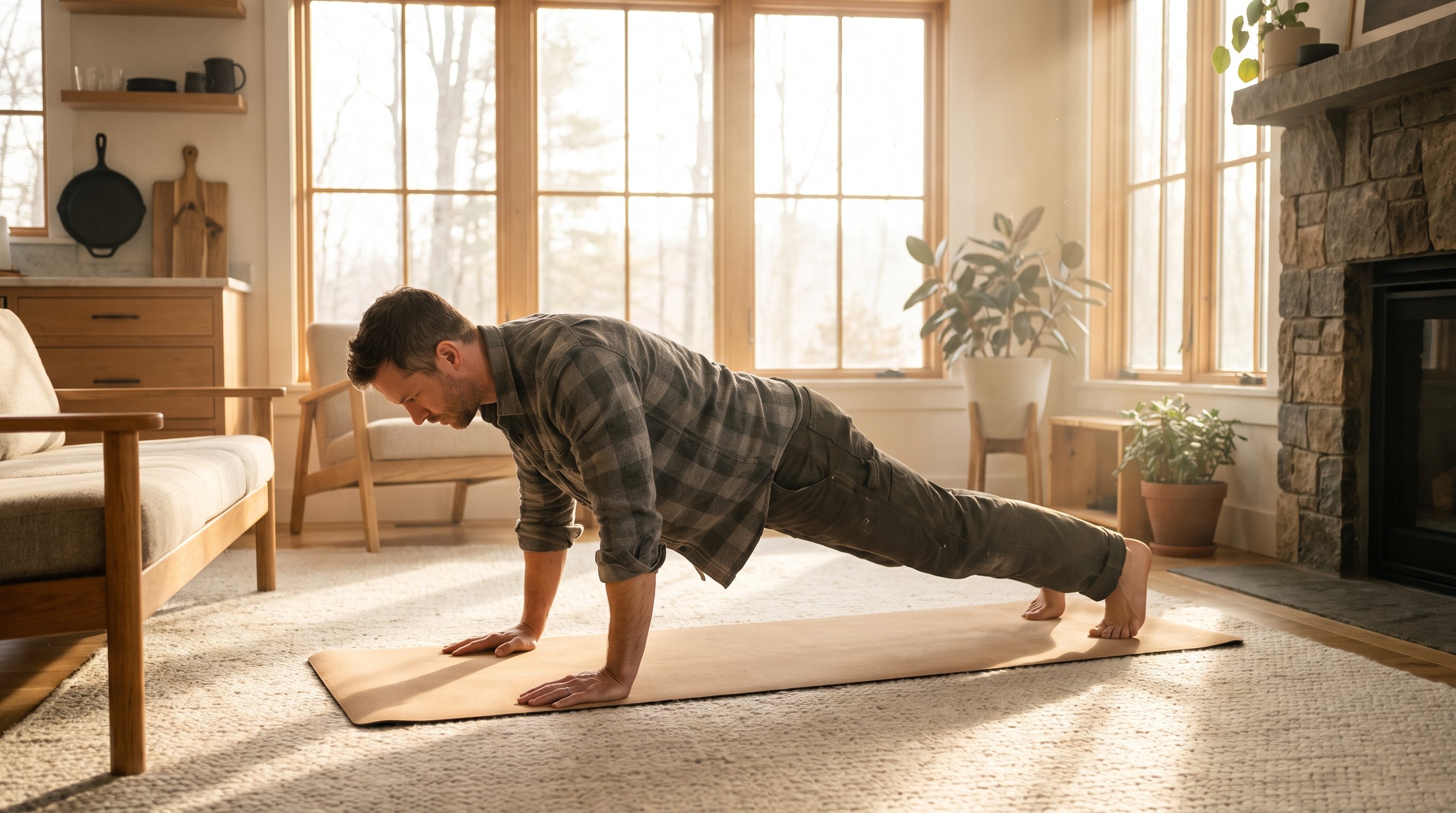
Push-ups, squats, rows and lunges all load muscle against resistance - your own bodyweight - and that resistance is what triggers strength adaptation over time.
There is no special equipment required for that mechanism to fire. A push-up against the floor is resistance training in the same way a bench press is - the load source is just different.
The Honest Arithmetic
Say a plan calls for 4 sessions a week, 20 minutes each. That is roughly 80 minutes a week, or under 6 hours a month - a small slice of anyone's week, which is exactly why it is easier to sustain than a plan asking for 90 minutes a day.
Strength and tone come from consistent load over weeks, not from any single session, no matter how hard it feels.
Why This Beats the Harder Alternative
A brutal 90-minute gym plan and a manageable 20-minute home plan can build the same strength over a year - the difference is which one you finish.
Adherence is the whole game. A plan only works on the days it gets done, and a plan that fits into a lunch break or before the household wakes up gets done far more often than one that needs a commute, a gym bag and a spare hour.

Think of it as sessions completed per month rather than intensity per session - 12 finished 20-minute sessions build more than 4 finished 90-minute ones, purely because 12 happened and 4 did not.
Movement alone is also slow without a change to what you eat, so the two need to work together rather than one carrying the whole plan.
The Quantity Question: How Much Calisthenics Do You Need?
Most beginner plans land somewhere between 3 and 5 sessions a week, with rest days built in for recovery rather than treated as a failure.
More sessions do not automatically mean more progress if the extra sessions are the ones that get skipped - a realistic number you'll actually repeat matters more than an ambitious one you won't.
Find Your Own Number
Start from the number of days you can genuinely protect on your calendar, then build the plan around that number - not the other way round.
| Week Type | Sessions | Session Length |
|---|---|---|
Very busy week | 2 to 3 sessions | 10 to 15 min |
Typical week | 3 to 4 sessions | 15 to 20 min |
Lighter week | 4 to 5 sessions | 20 to 25 min |
Pick the row that matches this week, not the week you wish you had, and adjust as life changes.
The Practical Question: How Do You Build the Plan Around Your Life?
The practical work is picking exercises that hit the main movement patterns - push, pull, squat, hinge, carry - and slotting them into the days you actually have.
Writing the plan is the easy part. Keeping track of whether you actually did it, what you ate that day, and whether your weight or energy is trending in the right direction is the part most people drop first.
A tailored workout plan paired with a meal plan of recipes you'd actually cook, and keeping steps, water and weight in one place so you're not guessing whether the week worked, makes the difference in building real habits.
That combination - a plan you can follow and a way to see it add up - is what turns a good intention into a repeated habit.
Calisthenics Workout Plan vs a Gym Membership: Which One Fits?
Both routes can build strength - the real decision is which one matches your schedule, budget and tolerance for travel time.
| Factor | Calisthenics At Home | Gym Membership |
|---|---|---|
Setup time | None needed | Commute each way |
Equipment | Bodyweight only | Machines and weights |
Session length | 10 to 25 min | Often 60 to 90 min |
Flexibility | Any room, any time | Fixed opening hours |
Ongoing cost | Low | Monthly membership fee |
Neither column is wrong - the point is picking the one you'll actually return to next week.
The Forbidden Promise, Answered Honestly
No workout plan, calisthenics or otherwise, can target fat loss from one specific area - the body does not choose where it draws energy from based on which muscle you just trained.
There is also no honest version of overnight results - strength and body composition change gradually, over weeks of repeated sessions, not a single hard workout.
The real answer is less exciting and more useful: consistent training across the whole body, paired with a sensible way of eating, changes how you look and feel over time - there is no shortcut hiding behind a specific move.
Factors That Change the Result
Three factors do most of the work in any calisthenics plan, and they are worth ranking honestly.
What Actually Moves the Needle
- Sessions completed per month - a moderate plan finished every week beats an intense one abandoned after two weeks, simply on total volume done.
- What you eat between sessions - training builds the case for change, but food is what supplies or withholds the energy behind it.
- Sleep and basic recovery - muscles adapt during rest, so skipping recovery most nights slows down what the sessions are trying to build.
How Long Until You See Results?
This is where most people quit - the first stretch where effort is going in and nothing visible seems to be coming out yet.
Strength gains and small changes in how clothes fit tend to show up gradually rather than on any fixed date, and the timeline varies enough between people that a specific number would be a guess, not a fact.

What's worth tracking instead of the mirror is whether sessions are actually happening - that number is the one you control every single week.
Your First Four Weeks
Order matters more than the exact exercises here - build the habit before you chase harder variations.
| Week | Focus | Main Goal |
|---|---|---|
Week 1 | Learn the basic moves | Just complete every session |
Week 2 | Add one extra rep or round | Keep the same schedule |
Week 3 | Notice which days slip | Adjust timing, not intensity |
Week 4 | Review what actually happened | Plan week five around it |
By week four, the plan should feel less like a decision and more like a fixture on the calendar.
What Stalls Progress
Starting Too Hard
A plan that feels punishing in week one rarely survives week three - scale the session down until it fits inside a normal day, then build from there.
Ignoring Food Completely
Training without any attention to what you eat leaves half the equation untouched - small, repeatable changes to meals matter as much as the sessions themselves.
No Way to See the Week
Without tracking sessions, water, or weight somewhere, it is easy to lose track of whether the week actually happened - a simple log closes that gap.
All or Nothing Thinking
Missing one session and treating the whole week as ruined is what actually causes most drop-off - a missed day is just a missed day, not a reason to stop.
Chasing Variety Too Early
Switching exercises every few days before the body has adapted to any of them slows down visible progress - repeat the basics longer than feels interesting.
Why Calistway Works
Everything above points to the same conclusion: the plan that gets finished is the plan that works, and finishing depends on the plan fitting your actual week.
Calistway builds a tailored calisthenics workout plan around your goals, pairs it with a meal plan, and keeps trackers, challenges and guides in one place so consistency is easier to see and easier to keep.
Final Thoughts
A calisthenics workout plan does not need to be complicated to work - it needs to be realistic enough that you actually do it week after week.
Start small, track what happens, adjust as you go, and let Calistway handle the structure while you focus on showing up.
FAQ
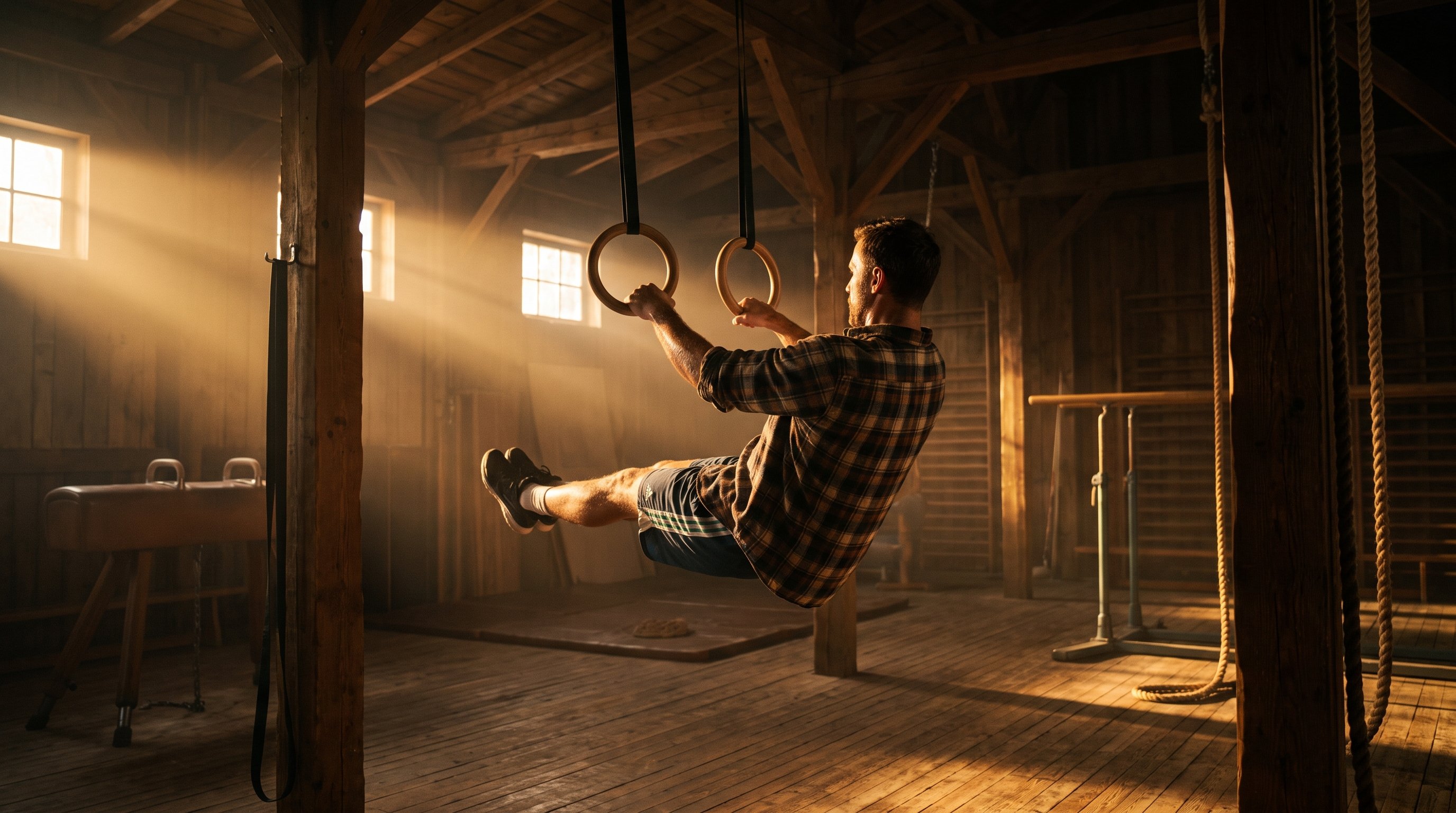
No - the core moves like push-ups, squats and lunges use only your own bodyweight as resistance. A sturdy bar helps later for pulling exercises, but it is not needed to begin.
Both build strength through the same basic mechanism - resistance against muscle over time. The speed of change depends far more on how often you train and what you eat than on which type of resistance you use.
Two consistent sessions every week beats five sessions planned but rarely finished. Build from two, then add a third once it feels sustainable rather than forcing five from the start.
Starting too hard, skipping meal planning, and having no way to see progress are the most common reasons sessions stop happening. Calistway addresses all three by pairing a tailored plan with a meal plan and simple trackers in one app.
Share this post