Calisthenics Exercises: How to Train Without Gym Machines
By:Author:Calistway Editorial
Updated on:October 16, 2026
- Do Calisthenics Exercises Actually Work?
- Why This Beats the Harder Alternative
- The Quantity Question: How Much, How Often
- The Practical Question: How Do You Actually Stick With It
- Comparison: Bodyweight Training Versus Gym Machines
- The Forbidden Promise, Answered Honestly
- Levers That Change the Result
- How Long Until You See Results?
- Your First Four Weeks
- What Stalls Progress
- Why Calistway Works for This
- Final Thoughts
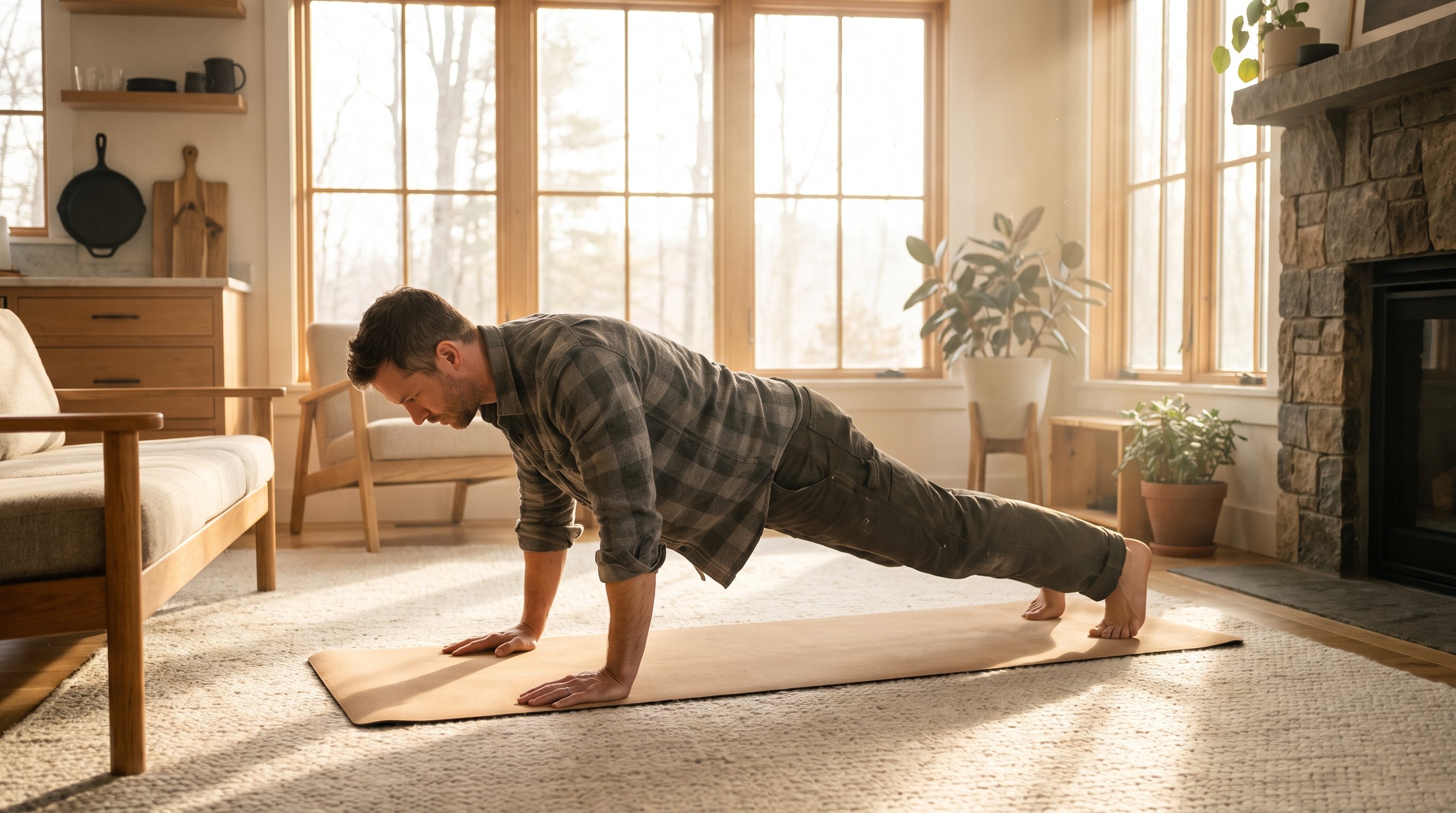
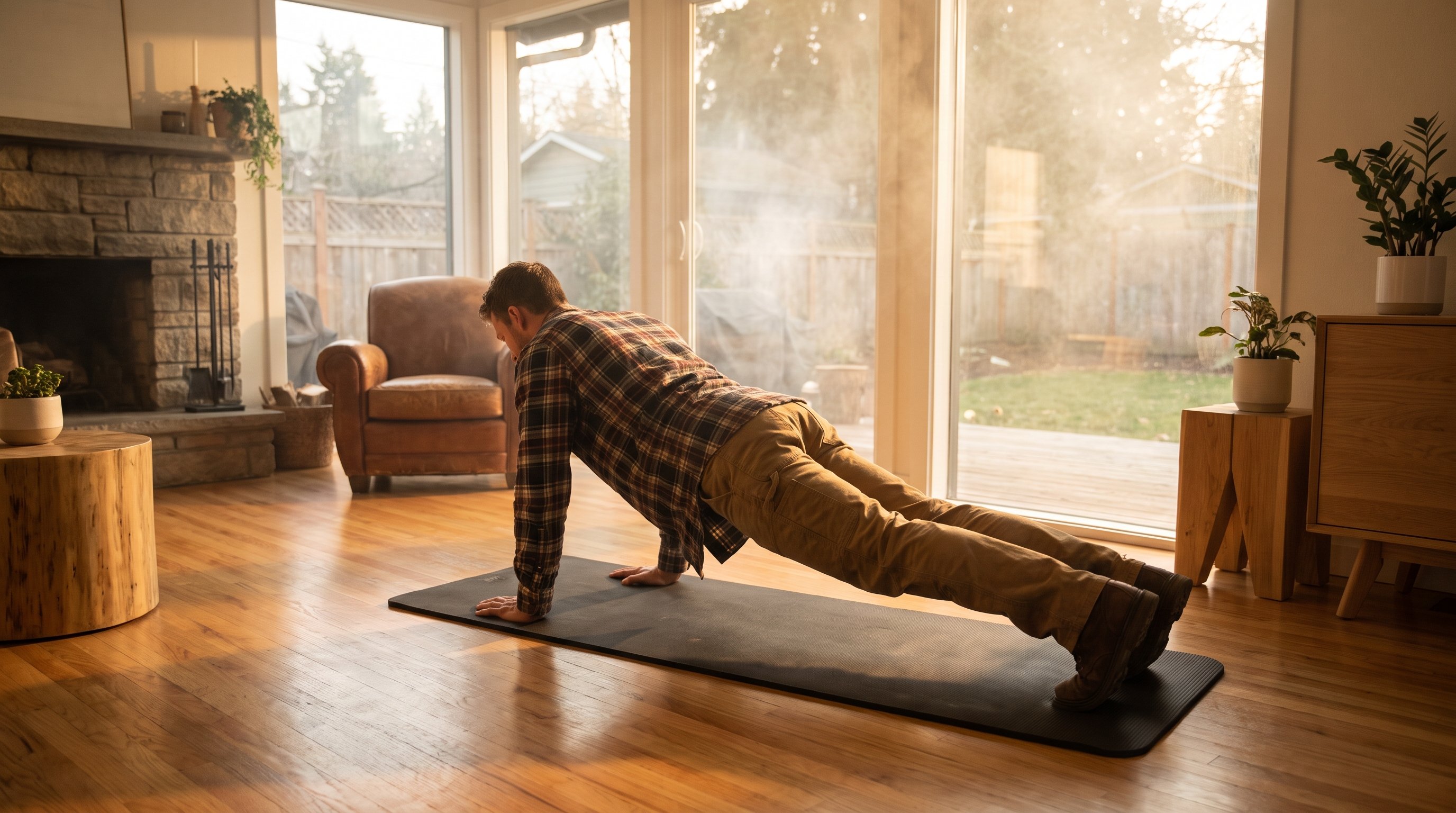
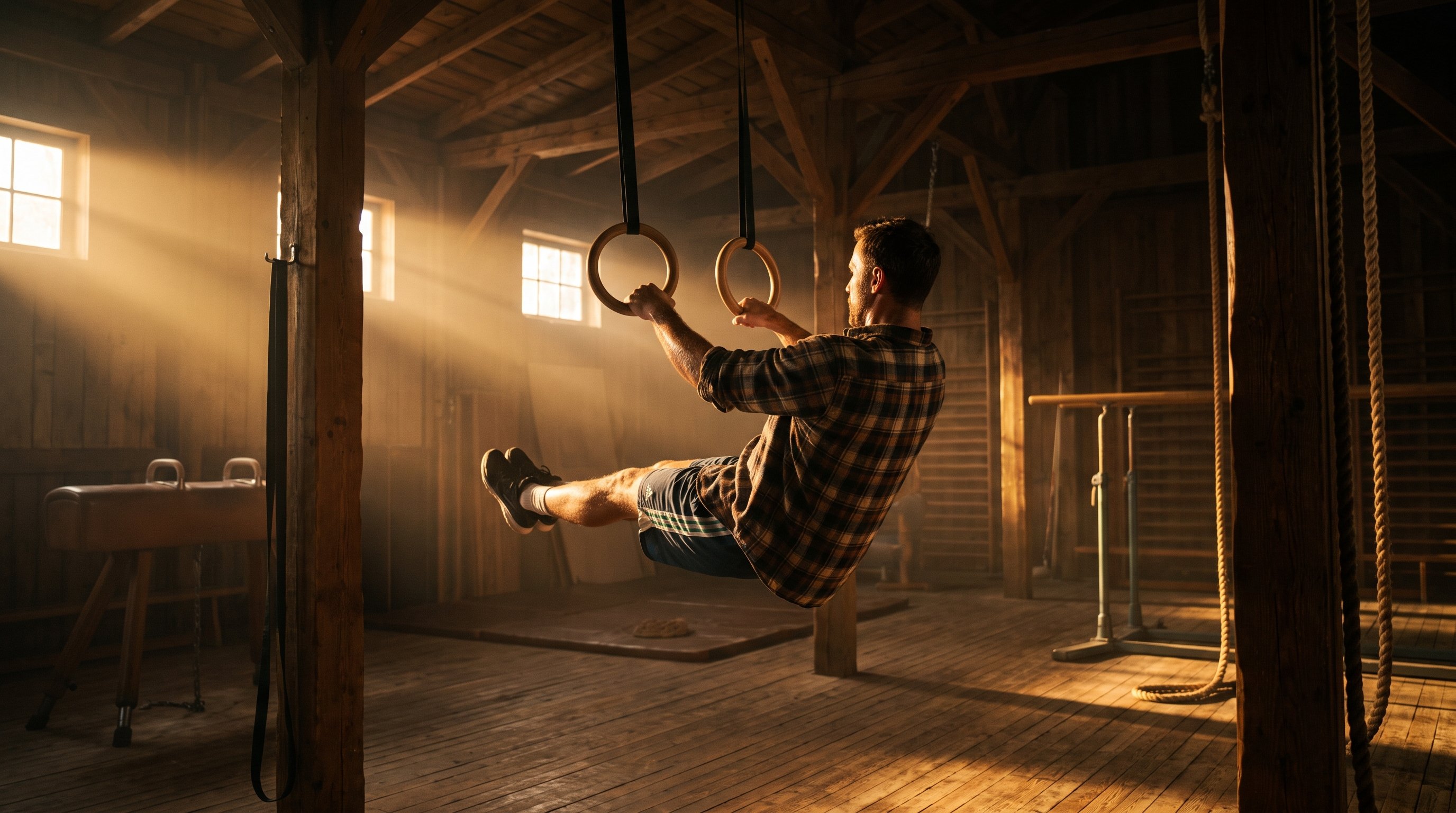
Calisthenics exercises use your own bodyweight as the load - push-ups, squats, lunges, planks, pull-ups - and you can do most of them in a space the size of a yoga mat.
The mechanism is simple: gravity plus your own mass creates resistance, your muscles adapt to that resistance, and strength follows. No barbell required, no gym membership, no equipment to store.
This guide covers whether bodyweight training actually works, how much you need to do, what stalls progress, and how to build a routine that survives a busy month instead of dying in week two.
Do Calisthenics Exercises Actually Work?
The mechanism behind bodyweight training is the same one behind any strength training: you put a muscle under enough tension, it adapts by getting stronger or more resilient over repeated sessions.
A push-up asks your chest, shoulders, triceps and core to move your own bodyweight through a range of motion - that's a real load, not a token gesture.
The honest arithmetic is this: three sessions a week for four weeks is twelve sessions of accumulated practice, and twelve sessions of anything beats zero sessions of a fancier plan you never started.
Where bodyweight training runs into a limit is on its own - movement alone changes fitness slowly if nutrition never shifts, because the exercises build capacity, they do not control what's on your plate.
Why This Beats the Harder Alternative
The alternative to bodyweight training is usually a gym membership, a commute, and a wait for equipment - three extra decisions between you and a workout.
Every extra decision is a place where a session can quietly not happen, and adherence is the whole game here - sessions completed per month matters more than how hard any single session felt.
Bodyweight training removes the friction: the workout is available the moment you decide to do it, in the clothes you're already wearing.
Twenty imperfect minutes done four times this month will outperform one perfect hour that only happened once, and that's really the whole argument for training at home.
The Quantity Question: How Much, How Often
There's no single number that fits everyone, but there is a sensible range to start from and adjust.
Two to four sessions a week, each built from a handful of bodyweight movements, gives your muscles enough stimulus to adapt without asking for more recovery time than a beginner's body can manage.
Find Your Own Number
Start at the low end of any range and only add sessions once the current amount feels easy to repeat, not once it feels easy to do.
That distinction matters - a workout can feel manageable in the moment and still be one you dread starting next time, which is the number to actually watch.
| Starting Point | Suggested Frequency | Main Focus |
|---|---|---|
New to training | 2 sessions weekly | Learn the movements |
Some experience | 3 sessions weekly | Build consistency |
Comfortable moving | 4 sessions weekly | Add variety |
The Practical Question: How Do You Actually Stick With It
Knowing how many sessions to do is one thing - remembering to do them, and knowing what to do once you're on the mat, is the part that actually trips people up.
A plan written down somewhere, with the exercises already picked for you, removes the daily decision-making that quietly drains motivation.
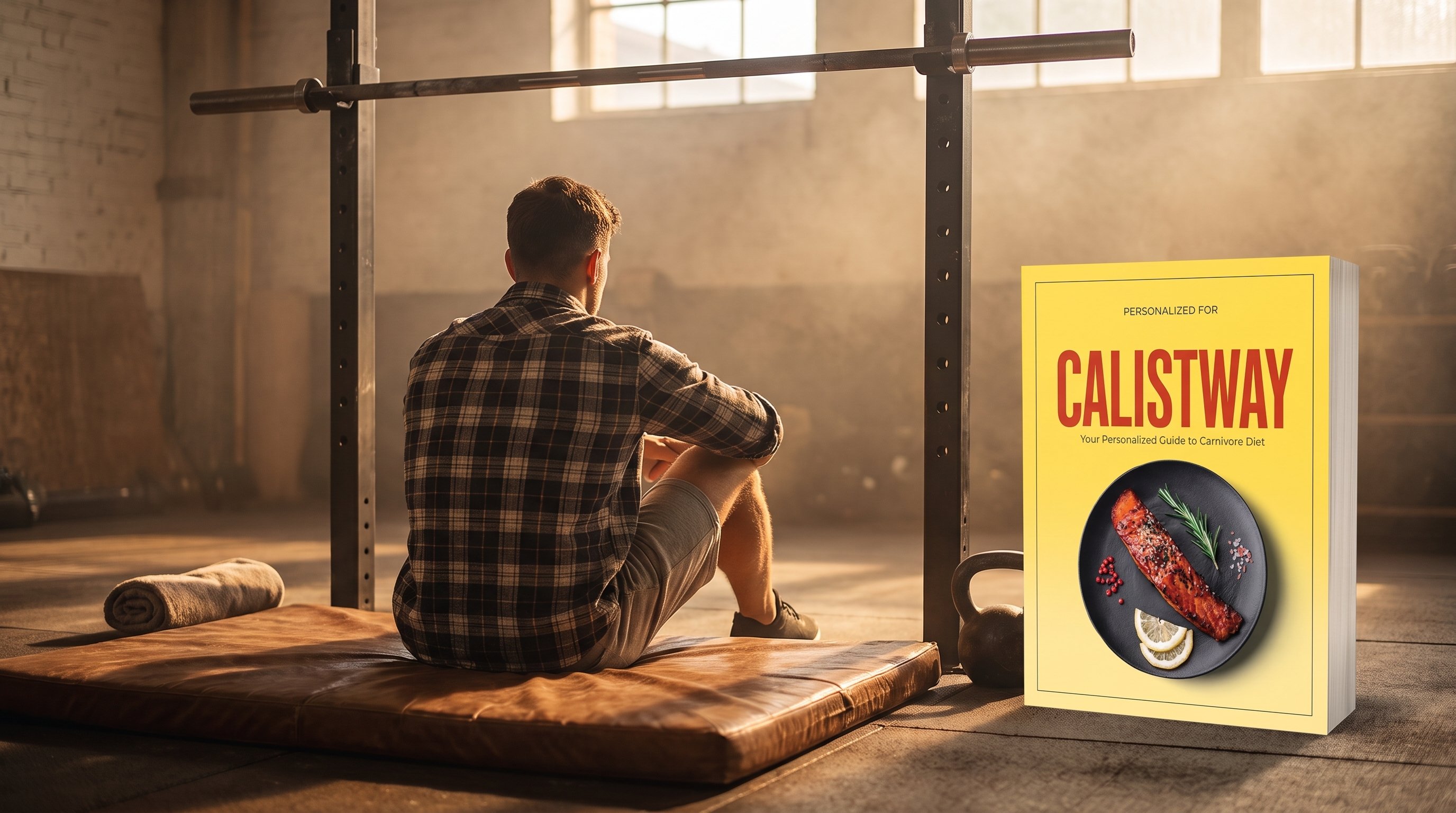
Calistway builds a tailored bodyweight plan around your current fitness and goals, so you open the app and the session is already decided - no guessing which movements to string together.
It also tracks steps, water, weight and progress in one place, which matters because you can't adjust what you never wrote down.
Comparison: Bodyweight Training Versus Gym Machines
Most people aren't choosing between two identical options - they're choosing between what's convenient and what's not, and convenience usually wins the long game.
| Factor | Calisthenics | Gym Training |
|---|---|---|
Cost | No membership needed | Monthly fee applies |
Setup time | Start immediately | Travel plus wait |
Space needed | Small floor area | Dedicated facility |
Equipment | Bodyweight only | Machines and weights |
Consistency | Easier to repeat | Harder to schedule |
The Forbidden Promise, Answered Honestly
No set of bodyweight exercises can target fat loss in one specific area - not your midsection, not your arms, not anywhere.
The body decides where it draws energy from, and that process isn't under the control of any workout, no matter how it's marketed.
There's also no overnight version of this - strength and body composition shift through repeated sessions over time, not through a single tough workout.
The honest answer is slower and more useful: consistent movement plus attention to what you eat changes how your body looks and feels, region by region isn't a choice you get to make.
Levers That Change the Result
A few factors matter more than the rest regarding what bodyweight training actually delivers over time.
What Moves the Needle
- Sessions completed per month - four scattered workouts beat one intense session every single time, because adaptation needs repetition, not heroics.
- What you eat alongside training - movement builds capacity, but nutrition is what actually shifts weight and body composition over weeks.
- How well you recover - sleep and rest days let the adaptation your muscles are working on actually complete itself.
How Long Until You See Results?
This is where most people quit - somewhere between the excitement of week one and the point where the mirror shows anything different.
There's no fixed date to circle on the calendar, and anyone promising one is guessing.
What's more useful is watching for the smaller signs first: an extra rep, a plank held a little longer, getting up from the floor without needing your hands.
Those small shifts show up before anything visible does, and they're the reason to keep the sessions on the calendar even when the scale hasn't moved yet.
Your First Four Weeks
The order of these four weeks matters more than the specific numbers - build the habit before you build the intensity.
| Week | Main Focus | Session Goal |
|---|---|---|
Week 1 | Learn the basic moves | Two short sessions |
Week 2 | Repeat and refine form | Three sessions |
Week 3 | Add one new exercise | Three to four sessions |
Week 4 | Notice what's easier | Four sessions |
What Stalls Progress
Starting Too Hard, Too Fast
A brutal first week guarantees soreness that makes week two feel impossible - start smaller than you think you need to.
No Plan for the Day You're Tired
Every routine needs a fallback shorter version, because the days you don't feel like it are the days that decide whether the habit survives.
Ignoring What You Eat
Movement alone moves slowly - pairing sessions with a meal plan that actually fits your life speeds up what you notice.
Skipping Recovery
Training the same tired muscles every day without rest blunts the adaptation you're working for - build in days off on purpose.
No Way to See Progress
If nothing is tracked, small wins go unnoticed and motivation quietly drains - write down or log what you do so improvement becomes visible.
Why Calistway Works for This
Everything above points to the same conclusion: adherence beats intensity, and adherence needs a plan you don't have to build yourself every single day.
Calistway gives you a tailored plan alongside a meal plan built around food you already like, over 1000 recipes included, so training and eating pull in the same direction instead of working against each other.
It also brings step counters, water intake, weight tracking and fasting tools into one place, plus challenges designed to keep you showing up on the weeks that feel hardest.
Final Thoughts
Bodyweight training works because the mechanism is simple and the barrier to starting is low - your own bodyweight, a small patch of floor, and a plan you'll actually repeat.
The next useful step isn't a perfect plan, it's the next session - and Calistway can hand you that plan so the only decision left is showing up.
FAQ
Yes - your own bodyweight is a real load, and repeated sessions over weeks build strength the same way any resistance training does. The exercises themselves need to be repeated consistently rather than done once at maximum effort.
Bodyweight training uses a different kind of resistance, not a lesser one - push-ups, squats and planks all load real muscle groups through a full range of motion. The main difference is that load increases through harder variations of a move rather than added plates.
Most bodyweight exercises need only the space of a yoga mat and no equipment at all, which is the entire point of training this way. A chair or wall can substitute for equipment in the few moves that ask for support.
The drop-off usually lands somewhere in the first few weeks, right when the excitement fades and results still haven't become visible. Calistway's tracking and challenges exist specifically to keep sessions on the calendar through that exact stretch.
Share this post