Calisthenics At Home: A Straightforward Guide That Works
By:Author:Calistway Editorial
Updated on:October 16, 2026
- Does Calisthenics at Home Actually Work?
- Why This Beats the Harder Alternative
- The Quantity Question: How Much, How Often
- The Practical Question: What Do You Actually Need
- Comparison: Home Calisthenics vs the Gym
- The Forbidden Promise, Answered Honestly
- Levers That Change the Result
- How Long Until You See Results?
- Your First Four Weeks
- What Stalls Progress
- Why Calistway Works for This
- Final Thoughts
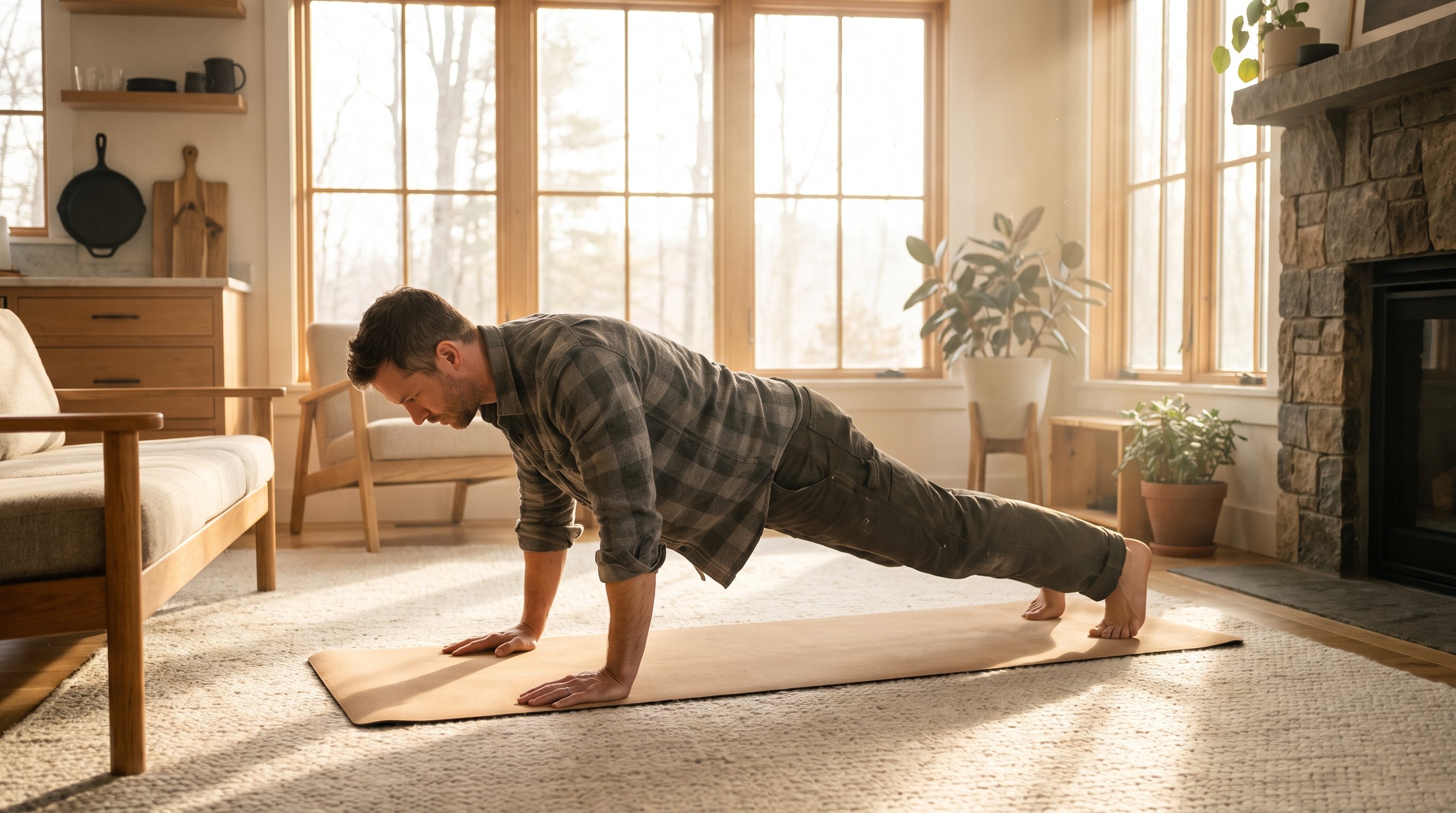
Four sessions a month beats one perfect workout every time. That is the whole argument for calisthenics at home: it removes every excuse standing between you and showing up.
The mechanism is simple. Your own bodyweight against gravity is enough resistance to build strength, and a living room floor is enough space to apply it.
This guide covers whether home calisthenics actually works, how much you need to do, what a realistic first month looks like, and where most people quietly fall off.
Does Calisthenics at Home Actually Work?
Calisthenics works on a basic mechanical principle: muscles get stronger when asked to do more than they are used to.
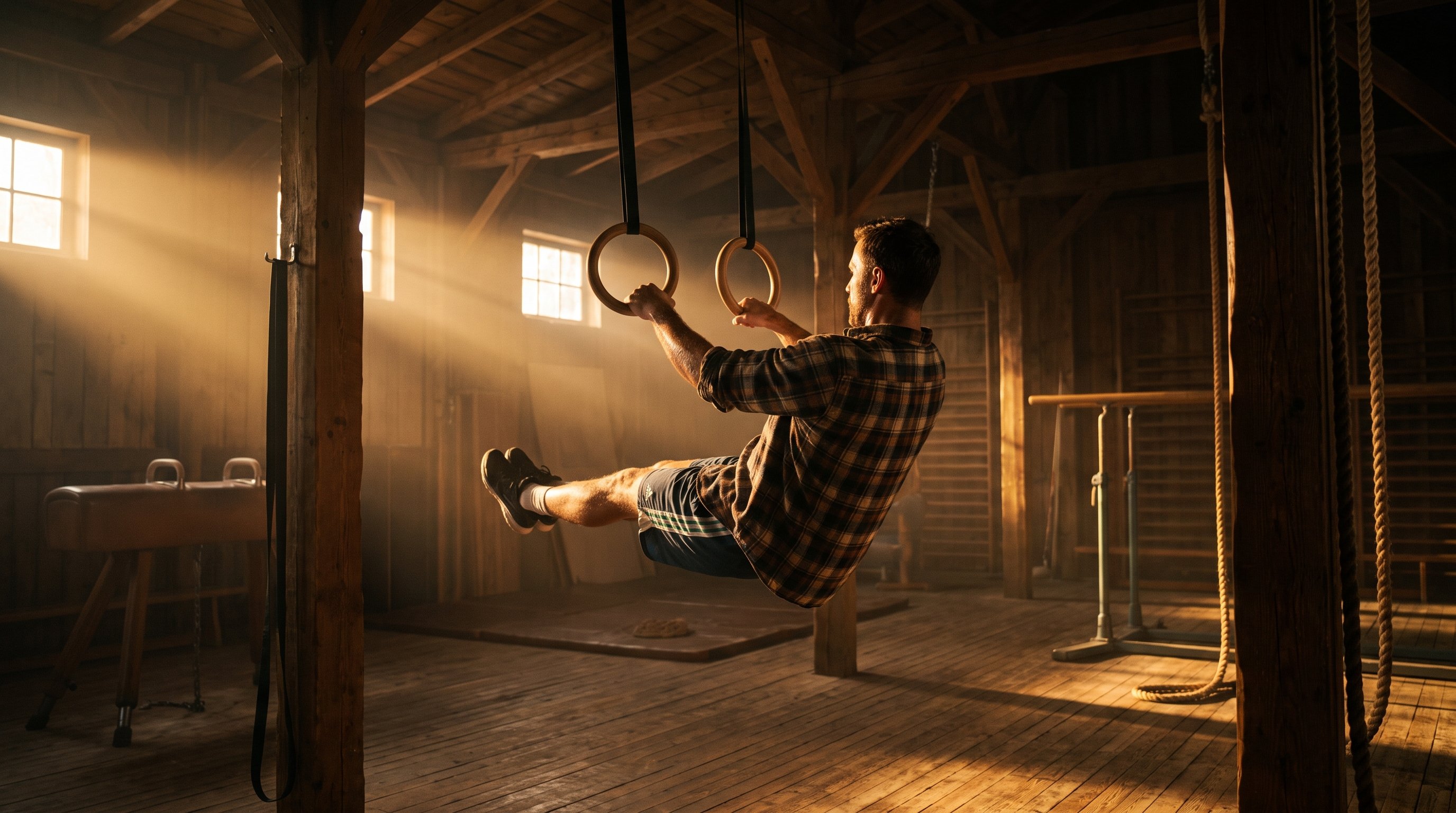
A push-up, a squat, a plank - each one loads muscle against your own bodyweight, and that load is adjustable by changing the angle, the tempo, or the number of reps.
The Honest Arithmetic
If you do 3 sessions a week for 4 weeks, that is 12 sessions of practice your body did not have before. Twelve sessions of squats, push-ups and planks is twelve chances to get a little better at moving your own weight, which is the entire basis of getting stronger.
There is no separate at-home penalty. The exercises that build strength in a gym are largely the same movement patterns you can load with nothing but a floor.
Why This Beats the Harder Alternative
The alternative to home calisthenics usually looks like a gym membership, a commute, and a locker room you have to psych yourself up for.
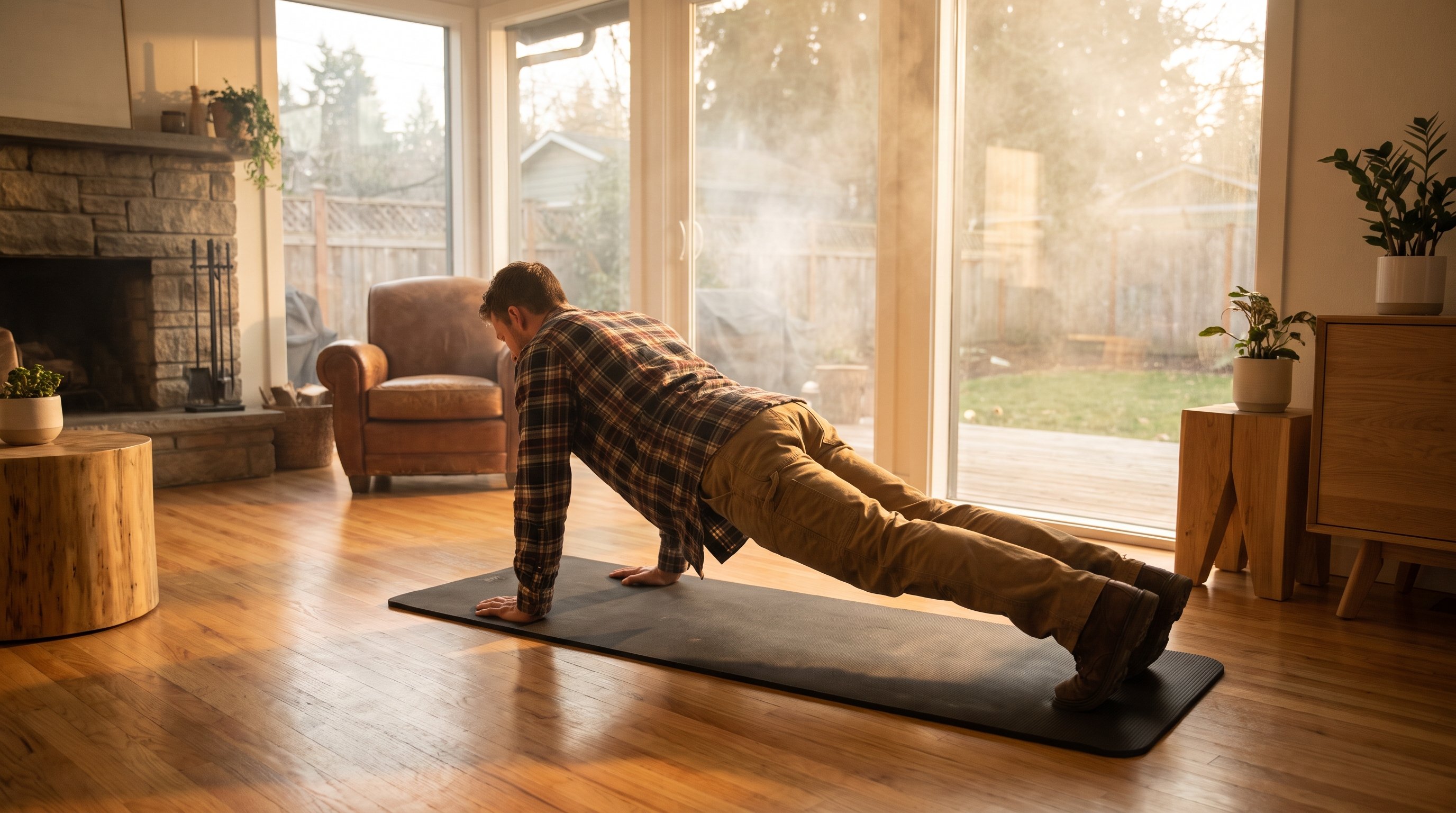
Every one of those steps is a chance to skip the session. Take them away and the only decision left is whether you get on the floor for 20 minutes.
Fewer decisions means fewer places to talk yourself out of it, and adherence - not intensity - is what actually compounds over months.
A hard session you do once beats nothing, but a moderate session you repeat 3 times a week for a year beats both by a wide margin.
The Quantity Question: How Much, How Often
There is no universal number that fits everyone, but there is a sensible range to start from and adjust.
Most beginners do well starting with short sessions spaced across the week rather than one long session, since recovery happens on the days off, not the days on.
Find Your Own Number
Start with a frequency you can repeat without dreading it, then add a session only once the current ones feel manageable. The right number is the highest one you will still be doing in a month.
| Starting Point | Suggested Frequency | Session Length |
|---|---|---|
Just starting | 2-3 sessions/week | 15-20 minutes |
Some experience | 3-4 sessions/week | 20-30 minutes |
Comfortable moving | 4-5 sessions/week | 30-40 minutes |
The Practical Question: What Do You Actually Need
Calisthenics at home solves the equipment problem, but it does not solve the structure problem on its own.
Without a plan, most people either repeat the same three exercises indefinitely or overdo it in week one and quit in week two.
This is where a guided plan helps - a customized workout builder constructs a plan tailored to your fitness and goals, so you know what to do each session without guessing, plus a way to keep steps, water and weight in one place so progress is visible instead of assumed.
Comparison: Home Calisthenics vs the Gym
The real decision most people are weighing is not which method builds more strength, it is which one they will actually stick with.
| Factor | At Home | At The Gym |
|---|---|---|
Cost | Free to low cost | Monthly membership fee |
Time per session | No travel time | Includes commute |
Equipment needed | None required | Machines and weights |
Barrier to starting | Low, floor space only | Higher, requires signup |
Consistency risk | Motivation-dependent | Access-dependent |
The Forbidden Promise, Answered Honestly
No, calisthenics at home cannot target fat loss in one specific area, and no home workout produces results overnight.
The body decides where it loses weight from, not the exercise you choose, and that process happens gradually across the whole body, not just where you trained.
The real answer is less exciting but more honest: consistent movement combined with a sensible eating pattern changes your body composition over time, and there is no shortcut around that combination.
Levers That Change the Result
Some factors matter more than others regarding what home calisthenics can do for you.
What Actually Moves the Needle
- Sessions completed per month - showing up 12 times beats one intense session, because strength is built from repeated exposure, not a single effort.
- What you eat around training - movement alone is slow to change body composition without also adjusting what is on your plate.
- Sleep and recovery days - muscles adapt on rest days, so skipping recovery to train more often can slow progress rather than speed it up.
How Long Until You See Results?
This is where most people quit, right around the point where the new habit stops feeling exciting and starts feeling routine.
Strength and movement usually feel different before the mirror shows much of anything, and that gap is normal, not a sign that something is wrong.
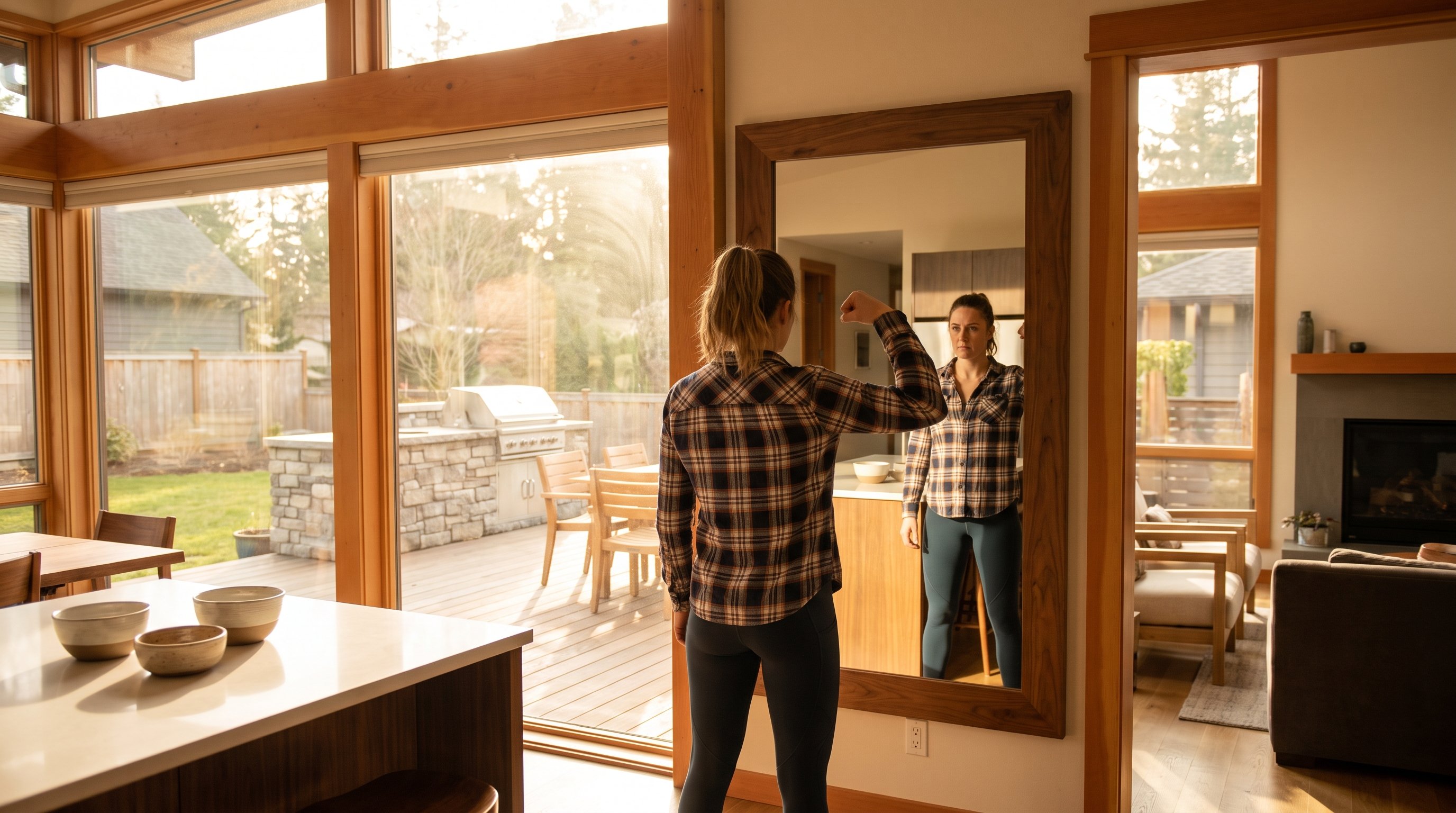
Rather than watching for a specific date, watch for the small signs: an easier push-up, a longer plank, a session that used to feel hard and now feels manageable.
Your First Four Weeks
The order of these weeks matters more than the exact numbers, since each week builds the habit the next one depends on.
| Week | Focus | Goal |
|---|---|---|
Week 1 | Learn the movements | Show up 3 times |
Week 2 | Repeat the same routine | Build the habit |
Week 3 | Add reps or a session | Small progression |
Week 4 | Review what felt hard | Adjust the plan |
What Stalls Progress
Starting Too Hard, Too Fast
Jumping to daily hour-long sessions in week one usually ends in soreness and a skipped week two. Start smaller than feels necessary and add from there.
No Plan for What to Do Each Session
Standing on the floor deciding exercises on the spot burns motivation before you even start moving. Decide the session the night before, or follow a plan that decides it for you.
Training Without Changing What You Eat
Movement alone is slow to change body composition on its own. Pairing sessions with a sensible eating pattern is what makes the effort add up faster.
No Way to See Progress
Without tracking anything, three weeks of consistent work can feel like nothing changed. Logging weight, steps or session count gives you evidence the effort is working even when the mirror is slow to show it.
Treating Rest Days As Wasted Days
Skipping recovery to train every day sounds committed but often backfires, since adaptation happens during rest, not during the workout itself. Scheduled rest days are part of the plan, not a break from it.
Why Calistway Works for This
Calistway is built around the exact problem this guide keeps circling back to: showing up matters more than any single session's intensity.
It gives you a calisthenics plan tailored to your fitness and goals, a meal plan built around easy-to-follow recipes, trackers for steps, water, weight and fasting, and challenges designed to keep you consistent when motivation dips.
Final Thoughts
Calisthenics at home works because it removes the friction that stops most fitness attempts before they start - no commute, no equipment, no excuse.
Pick a frequency you can actually repeat, pair it with a sensible eating pattern, and let Calistway handle the planning so you can focus on showing up.
FAQ
For most beginner and intermediate goals, bodyweight exercises provide plenty of resistance to build real strength. Weights become more relevant once bodyweight movements feel easy, which for most people takes a good stretch of consistent training first.
The movement patterns that build strength - pushing, pulling, squatting, bracing - are the same whether you load them with a floor or a machine. What changes is the ceiling for how much resistance you can add, which matters more at advanced levels than at the start.
Most calisthenics moves need roughly the space of a yoga mat, so a small clear patch of floor is usually enough. Space is rarely the real barrier, time and structure usually are.
That is usually the point that the initial motivation fades and the routine starts feeling ordinary, which is exactly when structure matters most. Calistway's guided plans and challenges are built to carry you through that exact dip, so consistency does not depend on motivation alone.
Share this post