Bodyweight Training: Practical Routines That Beat the Gym
By:Author:Calistway Editorial
Updated on:October 16, 2026
- Does It Work?
- Why This Beats the Harder Alternative
- The Quantity Question
- The Practical Question
- Comparison: Bodyweight Routines Versus the Alternatives
- The Forbidden Promise, Answered Honestly
- Levers That Change the Result
- How Long Until You See Results?
- Your First Four Weeks
- What Stalls Progress
- Why Calistway Works
- Final Thoughts
One number matters more than any other here: sessions completed per month. Someone who does 12 imperfect workouts beats someone who does 3 perfect ones, every time.
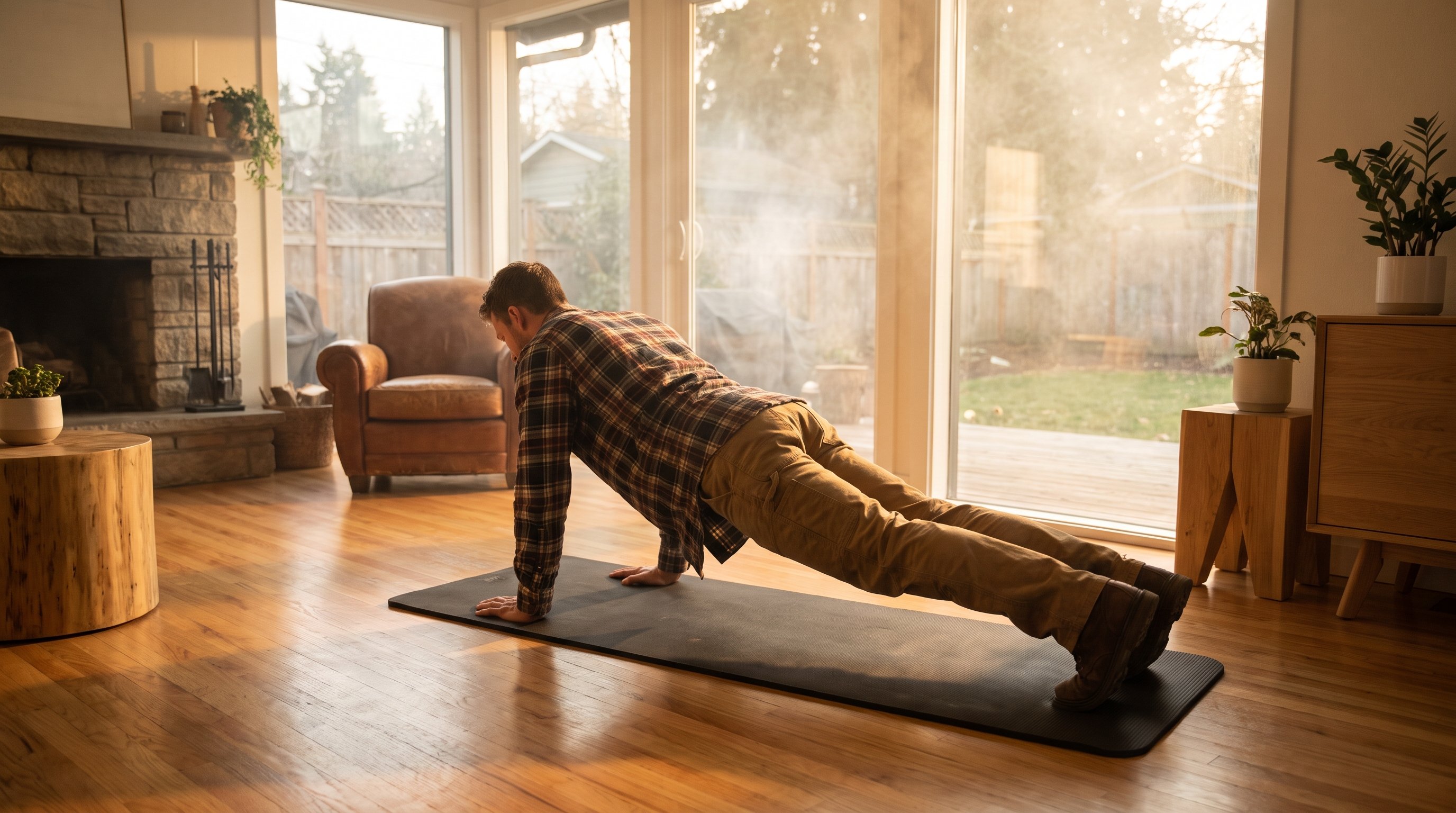
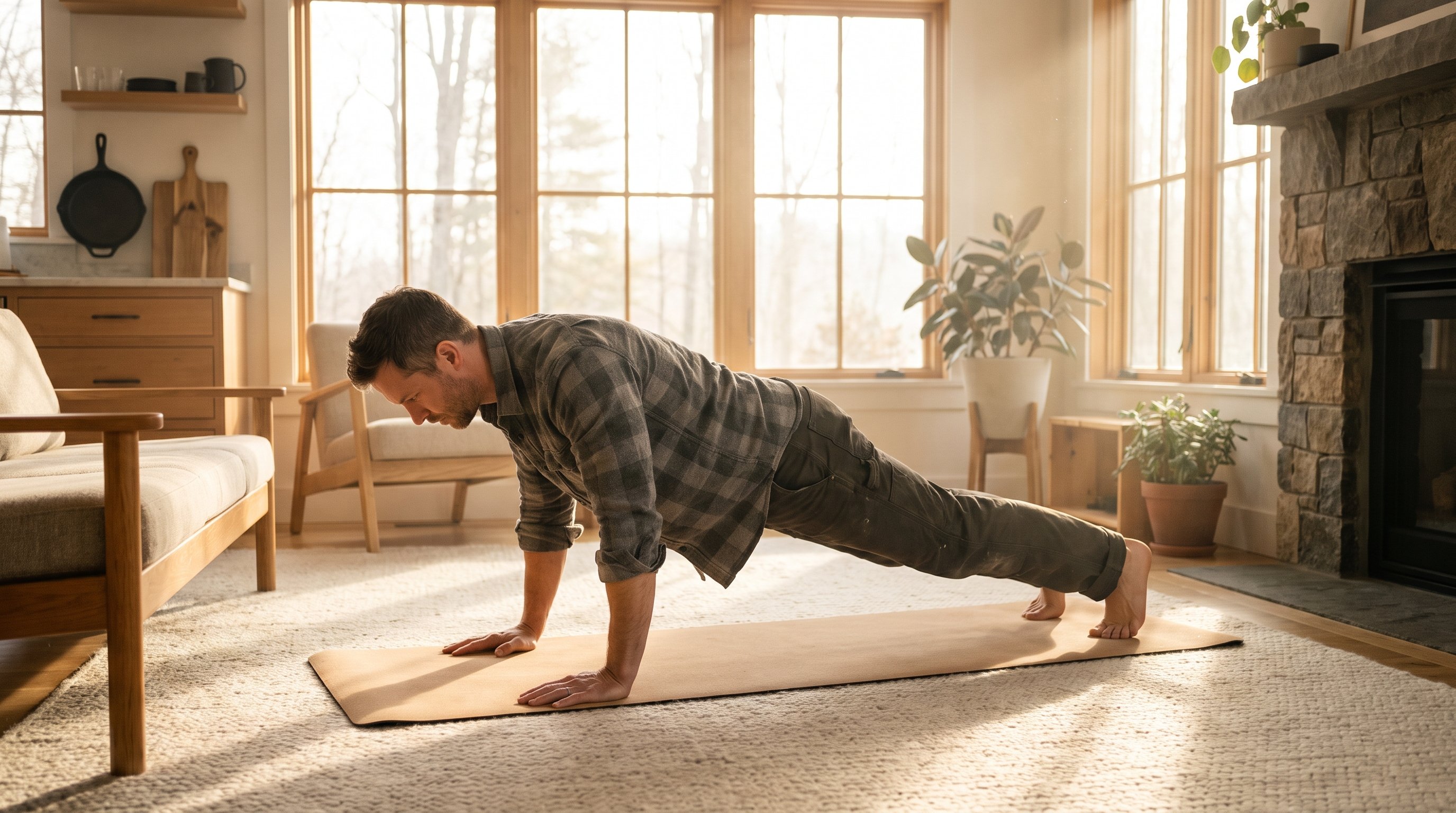
The mechanism is simple. Push-ups, squats, lunges and planks ask your muscles to work against your own mass, and your body adapts to that load the same way it adapts to a barbell - just without the equipment.
This guide covers whether it actually works, how much you need, what stalls people, and how to build a first month that sticks.
Does It Work?
The mechanism is load and repetition. A squat asks your legs to move your full body weight through a range of motion, and that's a genuine load your muscles have to respond to.
Do the arithmetic on a simple routine: 3 sets of 15 squats, 3 sets of 10 push-ups, 3 sets of 30-second planks, done 3 times a week.
That's roughly 20-25 minutes a session, 60-75 minutes a week, around 4-5 hours a month of actual movement - which adds up when it's repeated, not when it's occasional.
The honest limitation: movement alone changes how your body handles food and energy, but it won't undo what a plate of food adds on its own. Pairing consistent sessions with a sensible way of eating is what makes the arithmetic work in your favour.
Why This Beats the Harder Alternative
The harder alternative is a gym membership, equipment, travel time and a schedule built around someone else's opening hours.
Every one of those is a place to quit. No kit, no commute, no card needed - the routine happens in the same room you already spend your evenings in.

Fewer barriers mean more sessions get finished, and sessions finished is the only number that compounds.
A harder plan that gets skipped twice a week loses to an easier plan that gets done every time - the maths of adherence beats the maths of intensity.
The Quantity Question
How much is enough, how many sessions, how often - the honest answer is that it depends on where you're starting from and what else fills your week.
A workable range for most beginners sits between 3 and 5 sessions a week, each one 20-40 minutes, with at least one rest day between harder efforts.
Find Your Own Number
Start with the lowest number you know you'll actually complete, then add a session only once the current number feels easy to keep.
| Starting Point | Sessions | Session Length |
|---|---|---|
Just starting | 2-3 per week | 15-20 min |
Some experience | 3-4 per week | 25-35 min |
Regular mover | 4-5 per week | 30-45 min |
Building strength | 5-6 per week | 35-50 min |
The Practical Question
Knowing the numbers is one thing - remembering which exercises to do, at what pace, and whether you're actually getting anywhere is another.
That's the gap most people fall into around week two: no plan, no tracking, no clear next step.
A tailored workout plan closes that gap with guided calisthenics routines you can follow at home, and trackers for steps, water and weight so progress stays visible instead of guessed at.
Comparison: Bodyweight Routines Versus the Alternatives
Most people are weighing this against a gym membership, home equipment, or doing nothing structured at all.
| Option | Cost | Main Barrier | Flexibility |
|---|---|---|---|
Bodyweight at home | Low | Minimal | High |
Gym membership | Recurring fee | Travel, schedule | Low |
Home equipment | Upfront cost | Storage space | Medium |
Running or cycling | Low | Weather, terrain | Medium |
No structured plan | None | None | High, but inconsistent |
The lowest-barrier option wins most often, not because it's superior in theory, but because it's the one people keep doing.
The Forbidden Promise, Answered Honestly
No, a set of ab exercises won't burn fat off your stomach specifically, and no plan can promise results overnight.
The body decides where it draws energy from, and that decision isn't made area by area - it's whole-body, and it isn't yours to direct by choosing which muscle to train.
What's real is this: consistent movement plus a sensible way of eating changes your overall composition over time, and where that shows up first varies from person to person.
There's no cure here and no guarantee - just an honest mechanism that works slowly and rewards people who keep showing up.
Levers That Change the Result
Three things move the needle more than anything else, and they're listed here in order of impact.
What Actually Moves the Result
- Sessions completed per month - four short sessions finished beat one long session skipped, because the adaptation comes from repetition, not from any single heroic effort.
- What's on the plate - a meal plan built around food you already like removes the daily decision fatigue that derails movement gains.
- Sleep and recovery - muscles adapt in the hours after training, not during it, so a rushed recovery week quietly cancels out a good training week.
How Long Until You See Results?
This is where most people quit - the point where effort feels obvious but the mirror hasn't caught up yet.
There's no fixed timeline worth printing here, because starting point, consistency and eating habits all shift it in different directions.
What's fair to say is that early changes tend to show up as easier movement and steadier energy before they show up visually - so track how sessions feel, not just how you look.
Your First Four Weeks
The order of these four weeks matters more than the exact numbers in them.
| Week | Focus | Target |
|---|---|---|
Week 1 | Learn the moves | 2-3 sessions, easy pace |
Week 2 | Build the habit | 3 sessions, same time slot |
Week 3 | Add a rep or set | 3-4 sessions, slight increase |
Week 4 | Check consistency | 4 sessions, review what stuck |
What Stalls Progress
Starting Too Hard, Too Fast
A brutal first week that leaves you sore for five days teaches your brain to dread the next session - start easier than feels necessary and let the difficulty build slowly.
No Plan for What Comes Next
Doing random exercises with no structure means every session starts with a decision, and decisions are where motivation leaks out - a set routine removes that friction.
Ignoring Food Entirely
Movement changes what your body does with energy, but it can't outpace what consistently goes on the plate - small, steady changes to meals matter as much as the sessions themselves.
No Way to See Progress
Without tracking steps, weight or how sessions feel week to week, plateaus look identical to failure - visible numbers keep motivation honest.
Treating One Missed Week As the End
A missed week is a missed week, not a reset button - the next session is always the one that counts most.
Why Calistway Works
Everything above points to the same conclusion: consistency beats intensity, and consistency needs structure to survive real life.
Calistway builds that structure around you - a calisthenics plan tailored to your goals, a meal plan with over 1000 recipes so eating doesn't undo the sessions, trackers for steps, water, weight and fasting, and challenges designed to keep you showing up when motivation dips on its own.
Nutrition and wellness guides sit alongside the plans, so the reasoning behind each habit is never a mystery.
Final Thoughts
None of this needs to be complicated - a small routine, done often, in a space you already own, is the whole strategy.
If picking exercises and tracking progress is the part that keeps stalling you before you start, Calistway removes that decision from your plate so the only job left is showing up.
FAQ
No - a floor, some open space and your own body weight cover the basics for most beginner routines. A mat and a wall are useful extras, not requirements.
Difficulty comes from angles, tempo and added repetitions, not from external weight alone. A slower push-up or a single-leg squat variation can challenge muscles just as much as a loaded version.
You don't need a session every day - 3 to 5 shorter sessions a week, spread across your existing schedule, is enough to build a consistent habit. Shorter and repeated beats long and rare.
Losing track of progress and running out of new exercises are the two most common reasons people drift away. A tailored plan and built-in trackers keep momentum going, so the next session is always obvious.
Share this post