Calisthenics Workout: How Bodyweight Training Beats the Gym
By:Author:Calistway Editorial
Updated on:October 16, 2026

- The Myth That Bodyweight Training Only Tones
- How a Calisthenics Workout Changes Your Body
- What Changes Your Calisthenics Results Most
- A Week of Calisthenics You Can Actually Copy
- Making Calisthenics Fit a Packed Schedule
- When Calisthenics Progress Usually Shows Up
- Mistakes That Quietly Slow Progress
- Building a Calisthenics Workout Routine With Calistway
- Turning a Calisthenics Workout Into a Habit
A calisthenics workout uses your own bodyweight as resistance - push-ups, squats, pull-ups, lunges, planks - to build strength without a gym membership or equipment.
It works because your muscles do not know the difference between a barbell and your own bodyweight. Tension is tension, and your body adapts to whatever load it has to move repeatedly.
This guide covers what bodyweight training actually changes in your body, how to structure a week of training, where most people quit, and how to avoid the mistakes that quietly stall progress.
The Myth That Bodyweight Training Only Tones
A lot of people assume bodyweight exercise is for "toning" while weights are for "real strength". That is not how muscle works, and the distinction does not hold up.
Toning is not a separate process from building muscle - it is the same process, described with softer marketing language. Push-ups, pull-ups and squats build real strength when you do enough of them with enough difficulty.
There is also no such thing as targeting one area of your body for change, with weights or without them. Your body decides where it stores and releases fat based on its own patterns, not on which exercise you picked.
How a Calisthenics Workout Changes Your Body
Two mechanisms do most of the work here: mechanical tension and metabolic demand.
Mechanical Tension Builds the Muscle
When you push, pull or squat against your own weight, your muscle fibres experience tension and tiny amounts of controlled stress. Over repeated sessions, your body responds by reinforcing those fibres, which is how strength and muscle tone develop.
Repeated Effort Raises Your Energy Demand
A bodyweight training session that uses large muscle groups - legs, back, chest - asks your body for more energy than sitting still does. Stacked across a month, those sessions add up to a meaningful amount of extra movement, which matters more for your results than any single workout.
What Changes Your Calisthenics Results Most
Not every factor matters equally. Three things decide most of what you get out of bodyweight training.
The Three Levers That Matter
- Sessions completed per month - showing up four times a week, even for short sessions, beats one long, intense workout followed by days off.
- Progression over time - adding reps, harder variations, or less rest keeps your body adapting instead of plateauing on the same routine.
- What you eat around training - movement alone moves slowly without attention to food, since exercise cannot outpace a mismatched diet.
A Week of Calisthenics You Can Actually Copy
This is a simple weekly structure that covers the main muscle groups without needing equipment or a gym.
| Day | Focus |
|---|---|
| Monday | Push: push-ups, dips, planks |
| Tuesday | Rest or light walk |
| Wednesday | Pull: rows, pull-ups, curls |
| Thursday | Rest or light walk |
| Friday | Legs: squats, lunges, calf raises |
| Saturday | Full body: mixed circuit |
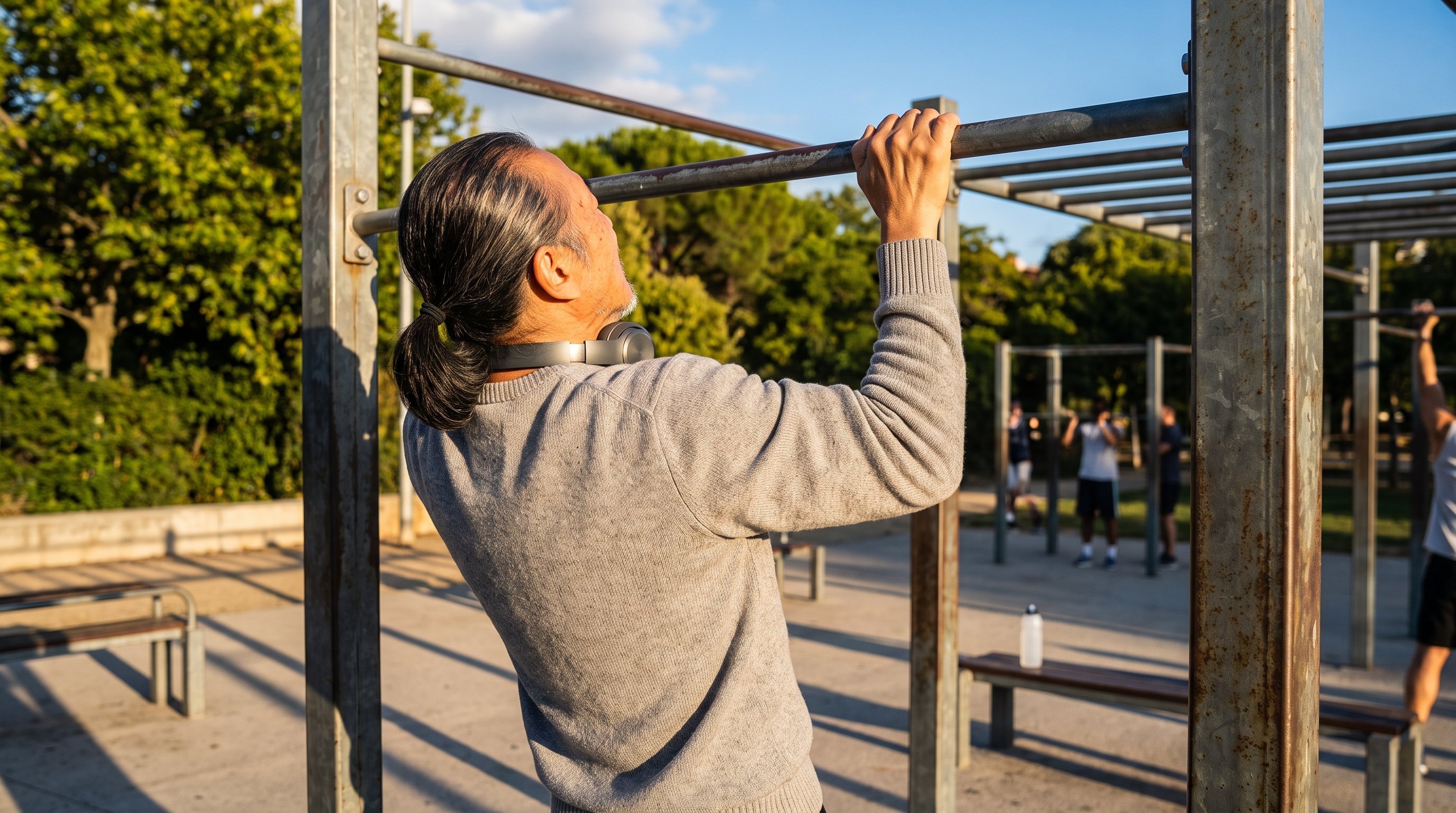
Sunday is left open on purpose - a full rest day or gentle stretching helps your body recover from the week's tension.
Making Calisthenics Fit a Packed Schedule
The biggest reason bodyweight training beats the gym for most people has nothing to do with the exercises themselves - it is the lack of friction.
No commute, no waiting for a machine, no gym bag to pack. A session can start the moment you clear a bit of floor space, which removes most of the excuses that stop people from training consistently.
This is where a guided plan helps. Calistway lays out a tailored routine so you are not guessing what to do each day, which makes it easier to fit training into whatever time you actually have.
When Calisthenics Progress Usually Shows Up
There is no fixed date when bodyweight training starts "working" - it depends on how often you train and what you eat alongside it.
What tends to happen is that the early weeks feel like learning a skill - getting the form right, finding which variations suit you. Strength and endurance tend to build gradually from there, as long as sessions keep happening.
This is also where most people quit - somewhere in the stretch where the exercises still feel hard but the payoff is not obvious yet. Getting through that stretch is less about motivation and more about having a routine simple enough to repeat without thinking.
Mistakes That Quietly Slow Progress
Skipping Progression Entirely
Doing the same ten push-ups every session stops challenging your body once it adapts. Add reps, slow the movement down, or switch to a harder variation every few weeks.
Training Only When Motivated
Waiting to feel like it means some weeks get zero sessions. Pick fixed days in advance so training does not depend on how you feel that morning.
Ignoring Nutrition Completely
Movement alone is slow without a matching change in what you eat. Pairing workouts with a structured meal plan closes the gap that exercise cannot close on its own.
Chasing Soreness Instead of Consistency
A workout that leaves you too sore to train again for a week is counterproductive. Moderate, repeatable sessions beat occasional brutal ones.
Building a Calisthenics Workout Routine With Calistway
Bodyweight training only pays off if it keeps happening, and that is the part most people struggle to manage alone.
Calistway gives you a tailored plan built around your current fitness and goals, guided exercises so you are not guessing at form, and trackers for steps, water and weight so progress stays visible instead of forgotten. It also pairs training with over 1000 recipes and metabolism-focused habits, so the nutrition side of the equation is not left to guesswork.

Train Your Body Daily
Build Strength With Exercise
Turning a Calisthenics Workout Into a Habit
The exercises themselves are simple - push, pull, squat, hold. What takes effort is doing them often enough, for long enough, that your body has a reason to adapt.
Pick three or four days this week, write them down, and start with a short session rather than waiting for the perfect plan. Calistway can take the guesswork out of what to do on each of those days, so showing up is the only decision left.
FAQ
Yes, your muscles respond to tension and effort, not to the specific object creating resistance. Bodyweight exercises can create enough tension to build strength and muscle as long as the difficulty increases over time.
Weights and bodyweight training both work through the same basic mechanism of challenging a muscle. The more useful question is which one you will actually do consistently, since consistency matters more than the equipment used.
Most calisthenics moves need only enough floor space to lie down and a bit of clearance to swing an arm or leg. A chair, step or wall can stand in for equipment when a routine calls for it.
That drop is common and it is usually a sign the routine needs more structure, not more willpower. Calistway's guided plans and challenges are built to keep sessions simple enough to repeat, even on the weeks motivation runs low.
Share this post