Bodyweight Training: Practical Routines That Beat the Gym
By:Author:Calistway Editorial
Updated on:October 16, 2026
- Does Bodyweight Training Actually Build Strength
- Two Mechanisms Behind Strength Gains Without Equipment
- Why Consistency Beats Exercise Selection
- Why Training at Home Beats a Complicated Gym Split
- Making Training Work Around a Full Day
- The Myth That Bodyweight Moves Reshape One Area
- What Drives Results Beyond Exercise Selection
- Mistakes That Quietly Undercut a Bodyweight Routine
- Building a Complete Program With Calistway
- Turning a Few Sessions Into a Lasting Habit
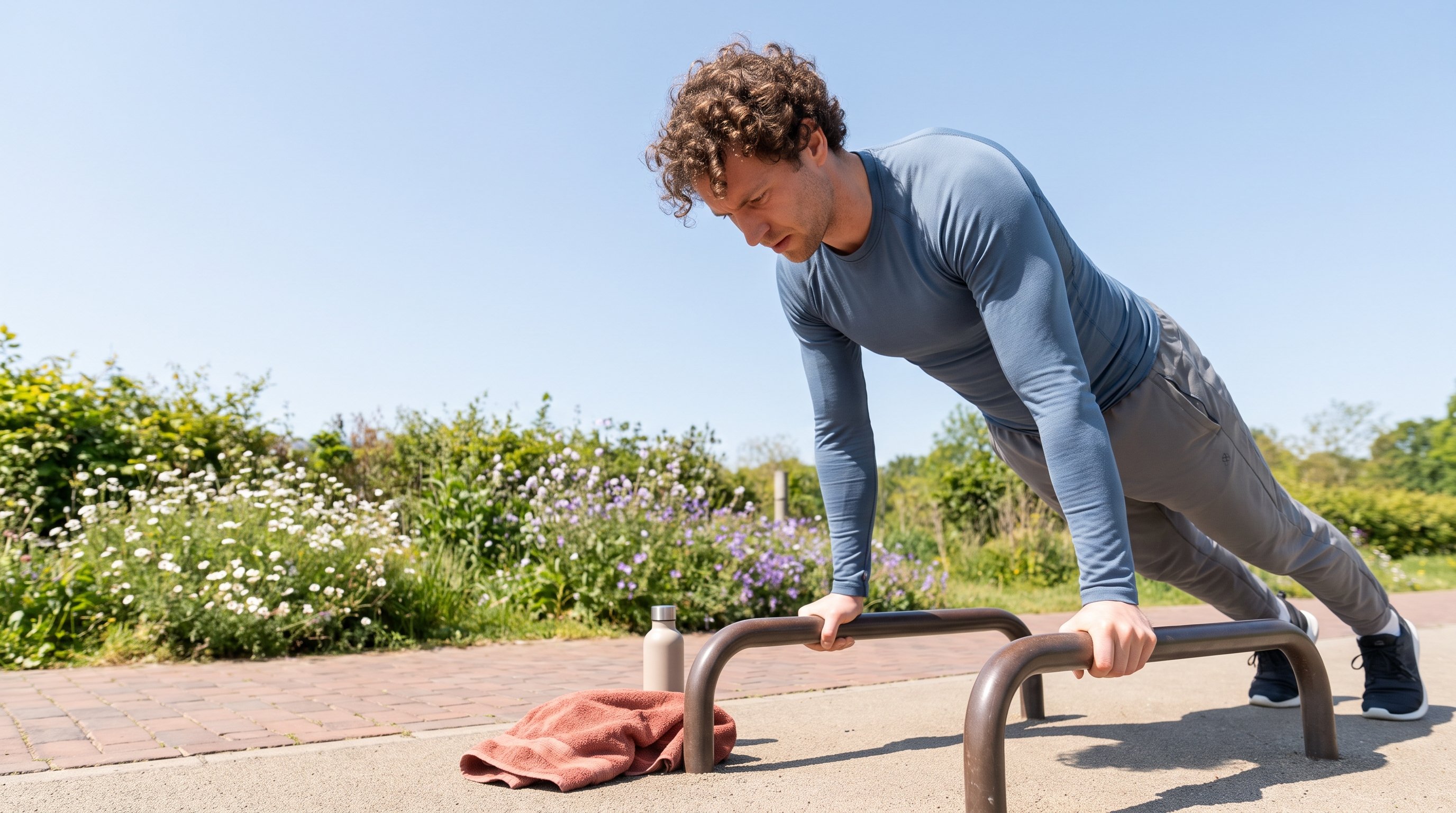
Bodyweight training builds real strength by making your own body the resistance, no barbell required. Push-ups, squats, rows on a table edge, lunges - the load is adjustable by angle, tempo and how you position yourself, not just added plates.
The mechanism is simple: muscles respond to tension and effort, not to the specific object creating that tension. A slow, controlled push-up loads the chest and arms the same way a bench press does, just through a different tool.
This article covers whether training with your own bodyweight actually works, how much of it you need, why it tends to stick better than a gym plan, and the mistakes that quietly slow people down.
Does Bodyweight Training Actually Build Strength
Yes - and the mechanism explains why. Strength comes from progressive tension on a muscle, and exercises using your own bodyweight create that tension through angle changes, single-limb variations and slower tempo, not just extra weight on a bar.
Take a push-up. A standard push-up might feel manageable after a few weeks, but raise your feet, slow the descent to three seconds, or move to one arm assisted by the other, and the same movement gets noticeably harder.
That is the whole arithmetic of bodyweight progress: change how you position yourself, change the tempo, or change the range of motion, and the muscle has to work harder to do the same job.
Four sessions a week, each roughly thirty minutes, adds up to two hours of weekly training - and that volume, repeated month after month, is what drives change, not any single hard session.
Two Mechanisms Behind Strength Gains Without Equipment
Two separate mechanisms are doing the work here, and understanding both explains why consistency matters more than any single exercise choice.
Mechanical Tension Through Positioning
Every exercise using your own bodyweight is a positioning problem - moving your hips further from your hands in a push-up, or standing on one leg instead of two in a squat, increases the load without adding a single kilogram.
Time Under Tension Through Tempo
Slowing down a rep, especially the lowering phase, keeps the muscle working longer per repetition, which is one of the simplest ways to make a move feel like a weighted one.
Why Consistency Beats Exercise Selection
Picking the perfect exercise list matters less than people think. What actually moves the needle is quantity and consistency over weeks.
A Starting Weekly Split
A simple four-day split - two full-body sessions and two focused sessions - gives muscles enough stimulus without requiring daily training.

| Day | Focus | Duration |
|---|---|---|
| Monday | Full body basics | 30 minutes |
| Tuesday | Rest or walk | Optional |
| Wednesday | Push and core | 30 minutes |
| Friday | Pull and legs | 30 minutes |
| Saturday | Full body basics | 30 minutes |
Four sessions a week at thirty minutes each comes to two hours total - a figure most weeks can absorb without major disruption.
Why Training at Home Beats a Complicated Gym Split
A complicated gym split with machine rotations, travel time and equipment queues sounds impressive on paper, but the version that actually gets done consistently wins over the version that looks better in theory.
Training with your own bodyweight removes the friction points - no commute, no waiting for a machine, no membership to justify. Fewer barriers between deciding to train and actually training means more sessions completed per month, and sessions completed is what drives any physical change.
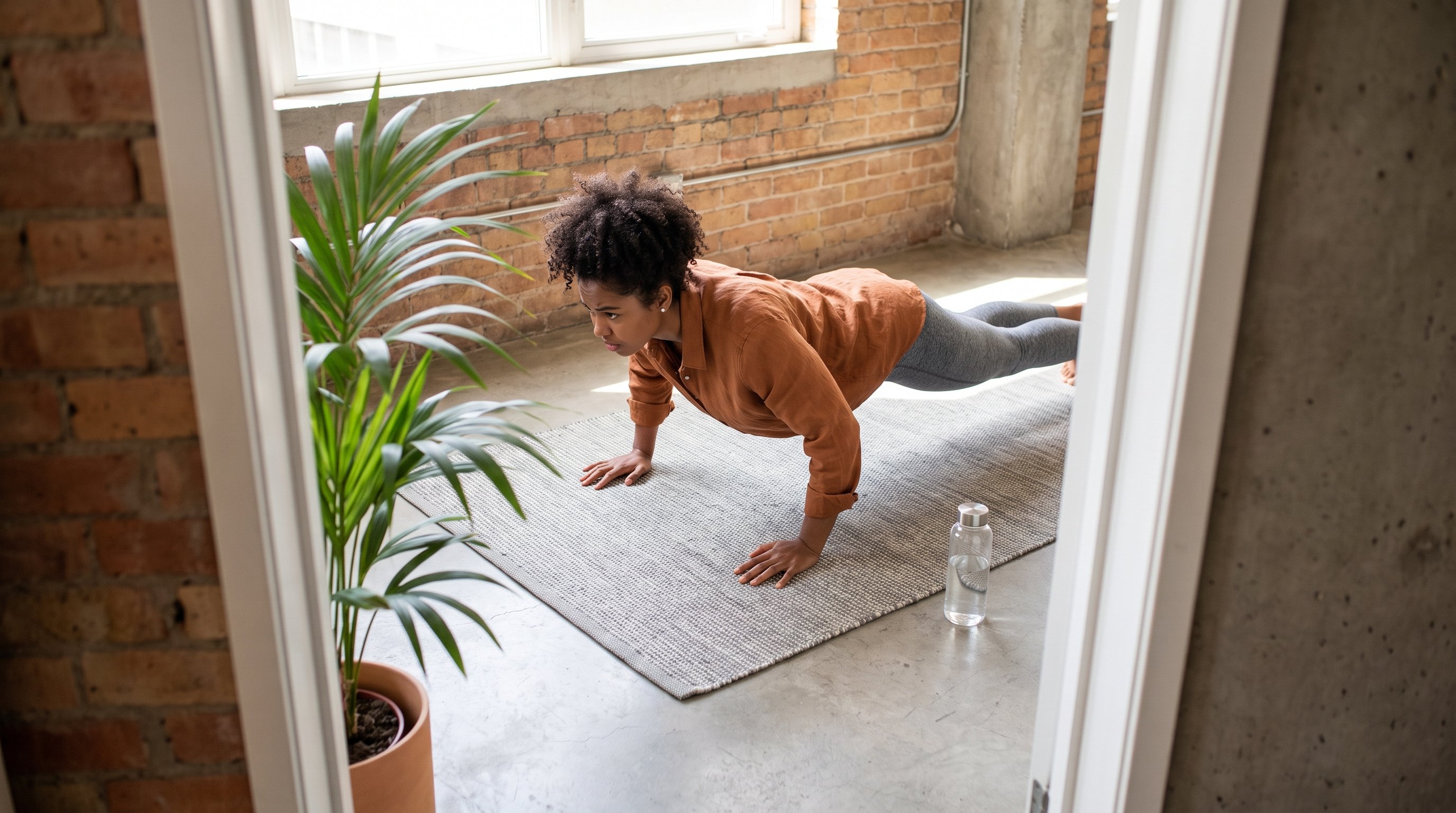
The gym split is not wrong, it is just harder to repeat. Adherence beats intensity almost every time, and training with your own bodyweight is built for adherence.
Making Training Work Around a Full Day
The biggest obstacle to a home routine is rarely the exercises themselves - it is deciding what to do and when, every single day, which eats willpower fast.
Removing that decision point is where structure helps. A guided plan that tells you what to do each day, paired with a meal plan built around food you already like, takes the daily guesswork out of the equation.
Calistway lays out a tailored calisthenics plan alongside progress tracking for steps, water and weight, so training fits into a day rather than competing with it.
The Myth That Bodyweight Moves Reshape One Area
No exercise, bodyweight or otherwise, can target fat loss in one specific area. The body decides where it draws energy from, and no amount of targeted crunches or lunges changes that order.
What training with your own bodyweight actually does is build strength and muscle tone across the areas you train, while any change in body composition comes from the broader combination of movement and what you eat.
The honest answer is less exciting than the myth but more useful: train consistently, eat in a way that supports your goal, and let the body change on its own timeline.
What Drives Results Beyond Exercise Selection
Three factors matter more than which exact exercises you pick on any given day.
Factors That Drive Real Change
- Sessions completed per month - four imperfect sessions beat one perfect one, because the body adapts to repeated stimulus, not a single hard effort.
- What you eat alongside training - movement alone is slow to change body composition without a matching shift in nutrition.
- Progressive difficulty over time - repeating the exact same push-up variation for months gives the muscle less reason to keep adapting.
Mistakes That Quietly Undercut a Bodyweight Routine
Skipping Progression Entirely
Doing the same ten push-ups every session for months stops giving the muscle a reason to change - add a harder variation, a slower tempo, or more reps instead.
Training Hard Once a Week
One brutal session followed by six days off does less than four moderate sessions spread across the week, because recovery and repeated stimulus both matter.
Ignoring Nutrition Completely
Training builds the capacity for change, but what you eat decides whether that capacity shows up as a visible difference over time.
Quitting Before Week Four
Early sessions often feel awkward and the pay-off is not obvious yet - the honest timeline for feeling stronger is measured in weeks, not days.
Building a Complete Program With Calistway
Building a routine from scratch means solving a lot of small problems at once - what to do, how often, how to progress, and what to eat alongside it.
Calistway answers those questions together instead of one at a time. It pairs a tailored calisthenics plan with over 1000 recipes, metabolism-focused daily habits, and challenges designed to keep you showing up when motivation dips.
Nutrition and health guides written by nutrition experts, personal trainers and psychologists sit alongside the workouts, so the training and the eating side are never working against each other.
Train Your Body Daily
Build Strength With Exercise
Turning a Few Sessions Into a Lasting Habit
The simplest next step is picking three or four days this week and putting them on a calendar before anything else fills that time.
Calistway can take the guesswork out of what each of those sessions looks like, so the only decision left is showing up.
FAQ
Yes, through the same mechanical tension that weighted training uses, just created through positioning and tempo instead of added plates. The timeline for visible change varies by person and by how consistently sessions get done.
Weights add load quickly, but training with your own bodyweight adjusts load through angle, range of motion and tempo instead, which covers a similar range of difficulty. The better option is whichever one you actually keep doing.
Most bodyweight exercises need roughly the space of a yoga mat, since there is no equipment to set up or store. A small clear patch of floor is usually enough for a full session.
Motivation naturally dips once the novelty wears off and progress feels slow, which is usually before visible change shows up. Calistway's trackers and challenges are built to keep sessions going through that exact stretch.
Share this post