Calisthenics For Beginners: A Straightforward Starting Guide
By:Author:Calistway Editorial
Updated on:October 28, 2026
- A First Week Anyone New Can Actually Follow
- How Many Sessions a Beginner Actually Needs
- Why Bodyweight Basics Beat an Ambitious Gym Plan
- Making Calisthenics Work Around a Real Schedule
- Who Beginner Calisthenics Actually Works For
- When Beginner Progress Usually Starts to Show
- Starting Calisthenics With Calistway As Your Guide
- Taking the First Honest Step Into Calisthenics
Calisthenics for beginners means squats, push-ups, planks and rows done with your own bodyweight, built up slowly so your joints and habits can keep pace with your effort.
The mechanism is simple: your muscles do not know whether resistance comes from a barbell or your own frame, they just respond to being asked to work harder than usual over time.
This guide covers what a first week looks like, how much training actually counts, why the easier route tends to win, and how to fit it into a life that is already full.
A First Week Anyone New Can Actually Follow
You don't need a complicated split to start. A first week just needs a repeatable pattern you can look at and copy without thinking too hard.
A Sample First Week
- Monday - full-body basics: squats, incline push-ups, glute bridges, plank
- Tuesday - rest or a walk, no structured training
- Wednesday - same full-body basics, slightly fewer reps if you're sore
- Thursday - rest or light stretching
- Friday - full-body basics again, aim to match Monday's effort
- Weekend - one optional easy session, or just rest
Three sessions in week one is plenty. The goal is not to impress anyone, it's to prove to yourself that you can repeat the routine without it wrecking your week.
How Many Sessions a Beginner Actually Needs
Sessions Beat Soreness
A beginner's results track with how many sessions get completed in a month, not how hard any single one felt the next morning.
Three short sessions a week, kept up for a month, beats one brutal session followed by two weeks of recovering from it.
| Stage | Sessions | Focus |
|---|---|---|
| Week 1-2 | 2-3 per week | Learn the movements |
| Week 3-4 | 3 per week | Build a repeatable rhythm |
| Week 5-8 | 3-4 per week | Add reps or sets gradually |
| Ongoing | 3-4 per week | Keep showing up, adjust as needed |
Why Bodyweight Basics Beat an Ambitious Gym Plan
Picture two starting points: a gym split with five different machines, or a living-room routine of squats, push-ups and planks.
The gym split asks for travel time, a membership, and enough confidence to walk past equipment you don't recognise yet.
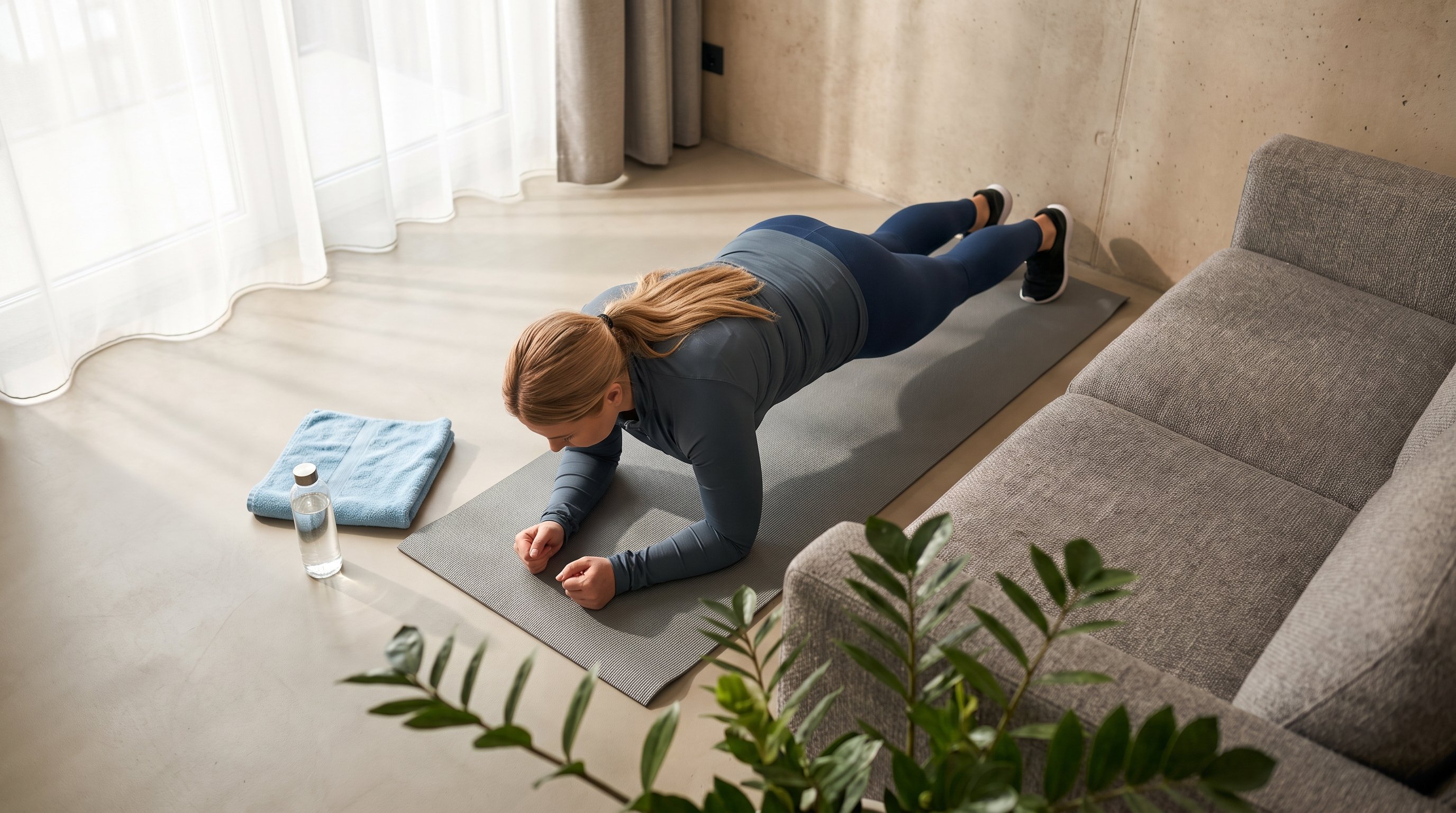
The living-room routine asks for a few square metres of floor and ten minutes, which makes it far easier to repeat often enough to actually add up.
Adherence is the whole game early on. A plan you'll actually finish beats a plan that looks more impressive on paper but gets skipped twice a week.
Making Calisthenics Work Around a Real Schedule
Most beginners don't quit because the exercises are too hard, they quit because the plan doesn't fit the rest of their day.
Keeping sessions short, home-based and simple to schedule removes most of the friction that usually gets in the way.
Calistway builds a workout plan tailored to your fitness level and goals, so a first week looks less like guesswork and more like a routine you can open and follow.
Pairing that with a meal plan built around food you already like, and trackers that keep steps, water and weight in one place, gives you a fuller picture than exercise alone.
Who Beginner Calisthenics Actually Works For
Complete Beginners
If you've never trained before, start with the basic movement patterns and don't worry about reps yet, just focus on form and finishing the session.
Busy People
If your week is already packed, three 15 to 20 minute sessions fit into gaps a gym trip never could.
Older Beginners
If you're returning to exercise after a long gap, lower the intensity rather than the frequency, doing the same movements with fewer reps keeps the habit intact while your body adjusts.
People Who've Tried Gyms Before and Stopped
If a gym membership never stuck, a home routine removes the travel and the unfamiliar equipment that often caused the drop-off in the first place.
When Beginner Progress Usually Starts to Show
Early on, the win is simply finishing sessions without dreading the next one, not any visible change.
Strength in basic movements tends to show up before any physical change does, which is exactly why tracking sessions and reps matters more than checking a mirror.
Most people who quit do it in the first few weeks, right around when the initial motivation fades and the routine hasn't become automatic yet.
Getting past that point is less about willpower and more about having a plan simple enough that skipping it feels like more effort than doing it.
Starting Calisthenics With Calistway As Your Guide
A beginner doesn't need more exercises, they need fewer decisions to make before they can start moving.
Calistway lays out a tailored calisthenics plan alongside guided bodyweight exercises, so you're not choosing between a dozen workouts or second-guessing your form.
Motivating challenges and progress trackers add a layer of accountability that a printed workout sheet never gives you, which matters most in the weeks when motivation is thin.
Train Your Body Daily
Build Strength With Exercise
Taking the First Honest Step Into Calisthenics
You don't need special kit or a free afternoon to start, you need one short session this week and another a few days later.
That's the whole system: repeat it, adjust the reps when it gets easier, and let the sessions add up.
If you'd rather follow a plan than build one from scratch, Calistway lays out the schedule, the exercises and the tracking in one place.
FAQ
There's no fixed timeframe, and it depends on consistency, sleep and what you eat alongside training, not the exercises alone. Movement alone tends to be slow without a change to how you eat, so treat the two as a pair rather than expecting one to carry the other.
Bodyweight exercises can build real strength because your muscles respond to the demand placed on them, regardless of whether that demand comes from a dumbbell or your own frame. As movements get easier you can add reps, slow the tempo, or try a harder variation to keep progressing.
Start with an easier version, like an incline push-up against a bench or counter, and build from there. Regressions aren't a lesser version of the exercise, they're the same movement pattern at a level your current strength can handle.
Most drop-off happens when the plan asks for more time or decisions than real life allows, not because the person couldn't handle the exercises. Calistway's plans are built around short, repeatable sessions with the thinking done for you, which removes a lot of the friction that causes people to quit early.
Share this post