Calisthenics For Beginners: A Straightforward Starting Guide
By:Author:Calistway Editorial
Updated on:September 30, 2026

- Does Calisthenics Actually Work for Beginners?
- Why This Beats the Harder Alternative
- The Quantity Question: How Much Calisthenics Do Beginners Need?
- The Practical Question: How Do You Actually Fit This In?
- Comparison: Calisthenics vs the Gym for Beginners
- The Forbidden Promise, Answered Honestly
- Levers That Change the Result
- How Long Until You See Results?
- Your First Four Weeks
- What Stalls Progress
- Why Calistway Works
- Final Thoughts
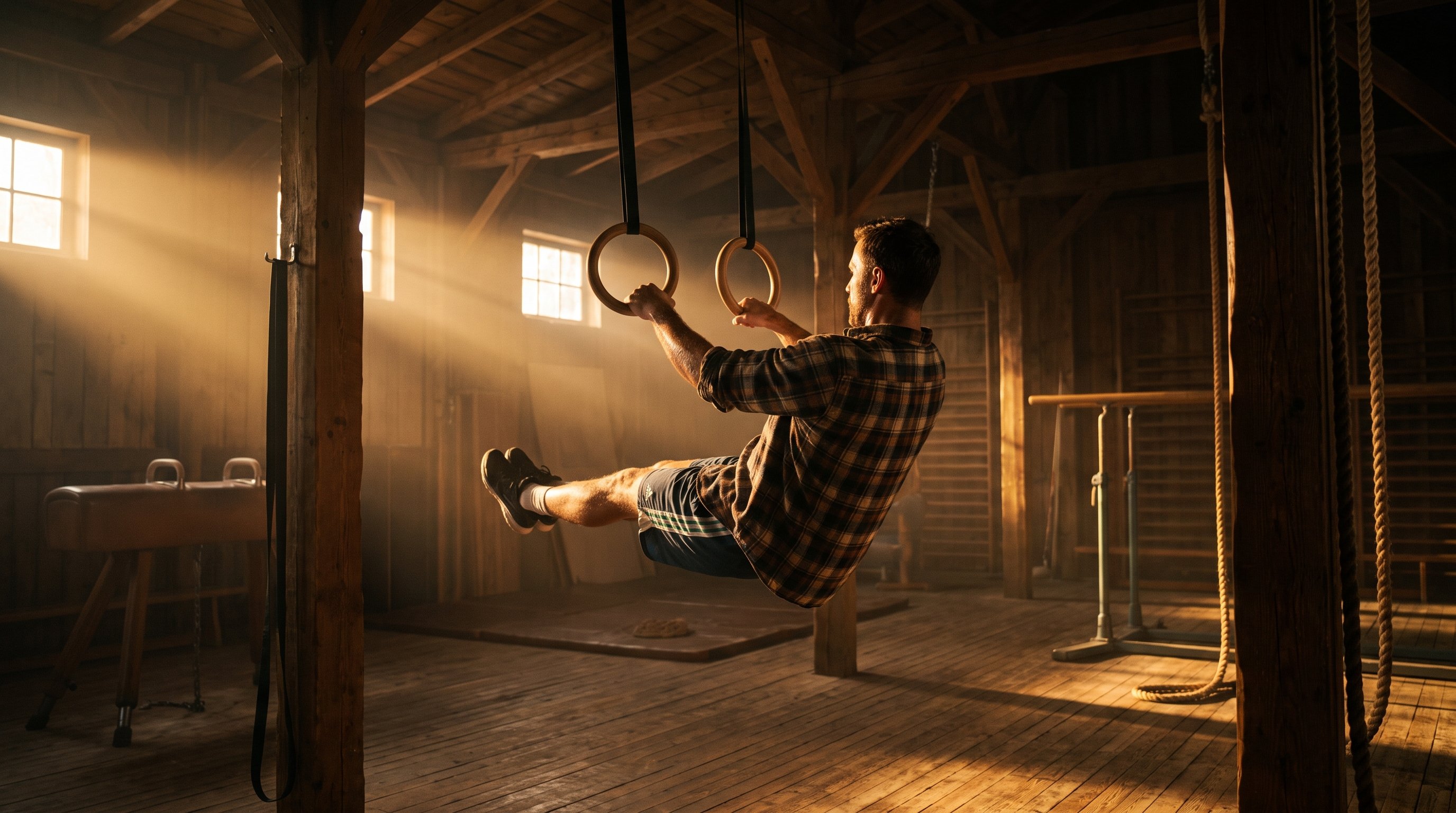
Calisthenics for beginners comes down to one number that matters more than any other: how many sessions you actually complete in a month, not how hard any single one feels.
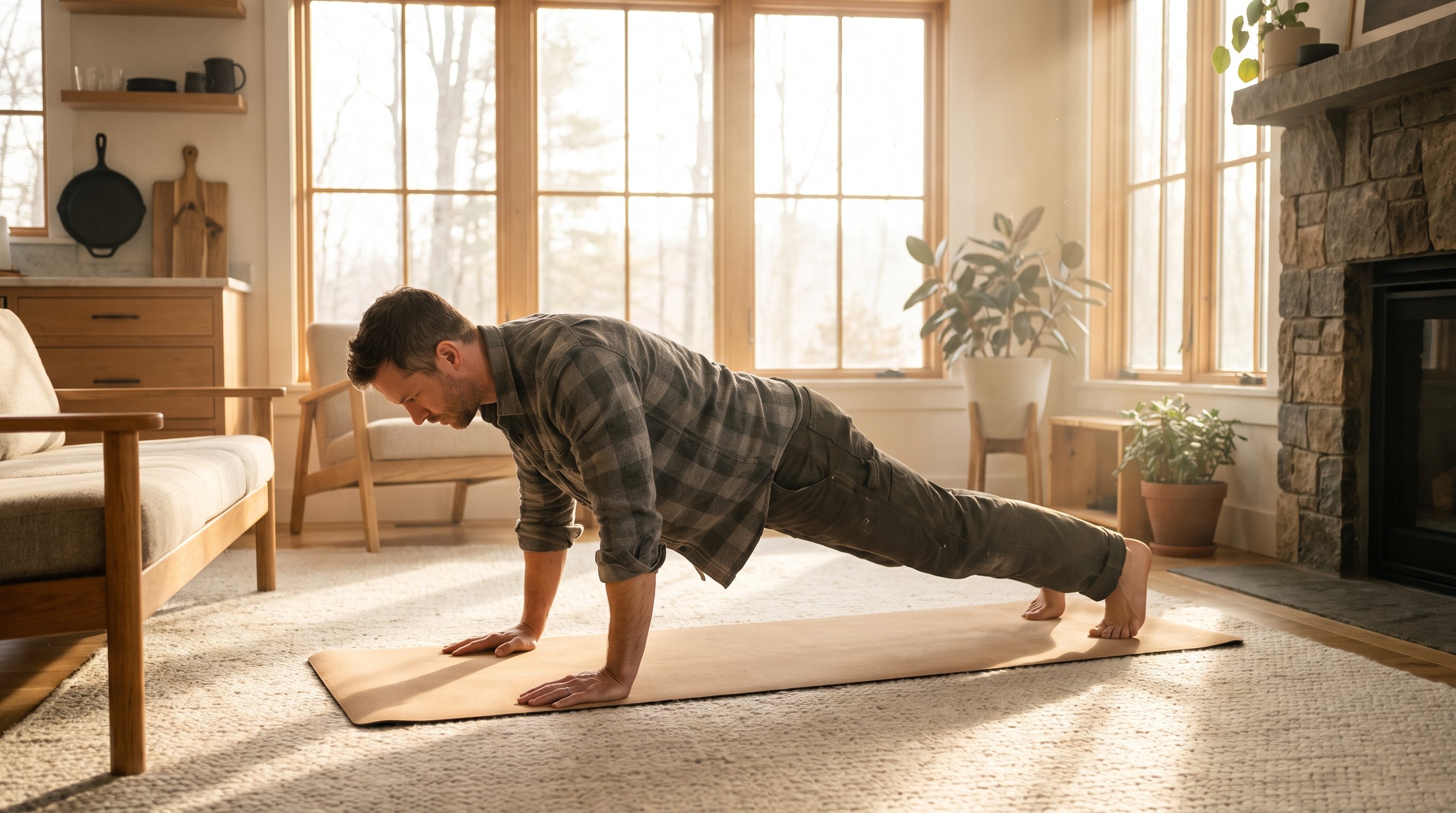
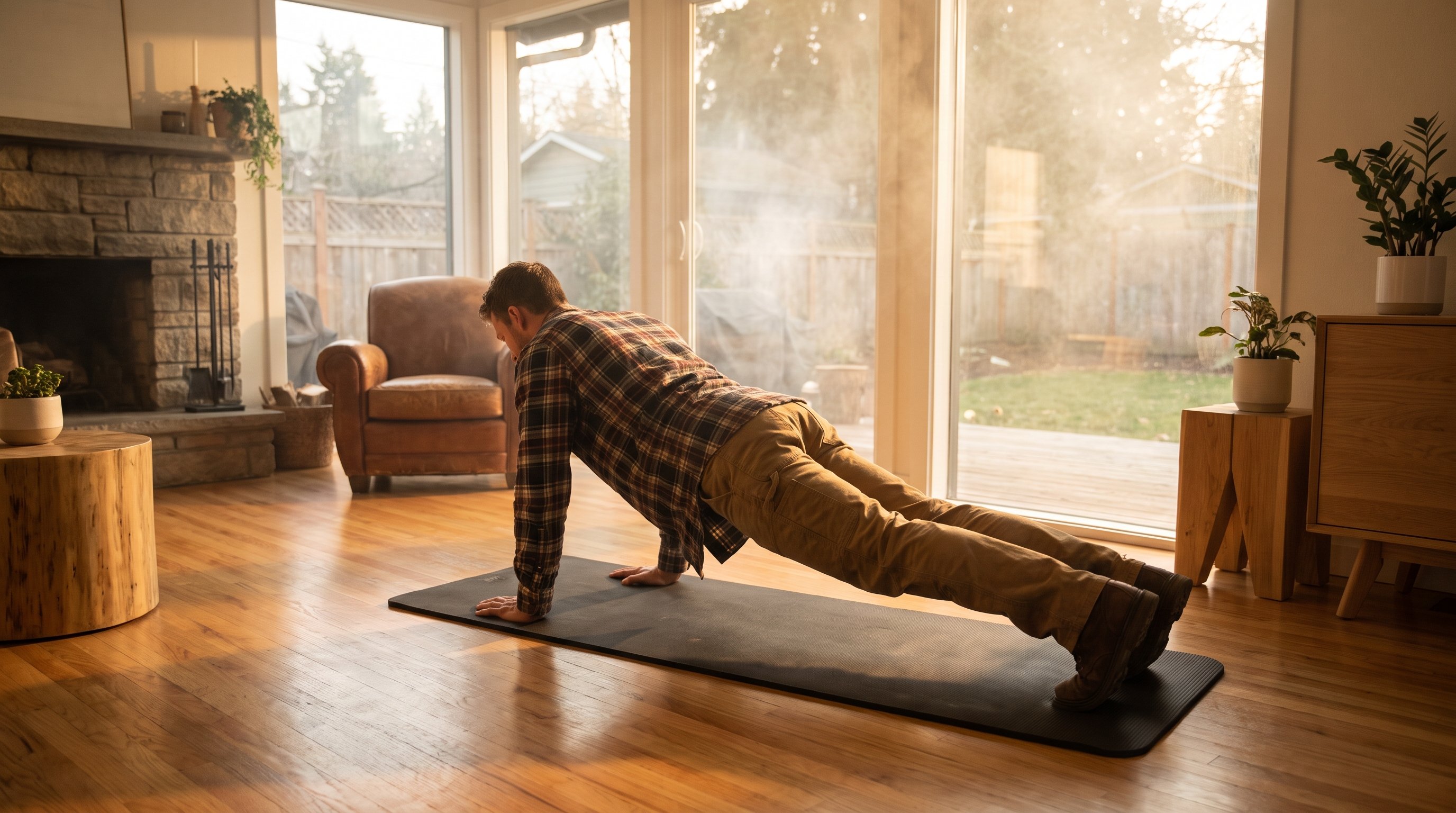
Bodyweight training works by asking your muscles to move against your own resistance, over and over, until that resistance stops feeling like enough and you adjust the exercise. No equipment, no gym membership, just consistent load applied over time.
This guide walks through whether calisthenics actually works, how much of it you need, what a first month realistically looks like, and where most beginners quit before anything changes.
Does Calisthenics Actually Work for Beginners?
Yes, in the sense that any movement pattern done regularly against resistance builds strength - and your own bodyweight is resistance.
A basic squat, push-up or row asks a muscle group to contract under load. Do that a few times a week and the muscle adapts by getting stronger and more efficient at the task.
Here's the honest arithmetic: if you do two sets of ten squats three times a week, that's 60 squats weekly, or roughly 240 a month.
Compare that to doing one hard session and then skipping two weeks - the monthly total collapses even though the single session felt more intense.
More completed sessions, not harder ones, is what adds up over a month.
Why This Beats the Harder Alternative
Gym programmes and intense bootcamps often ask a lot of a beginner on day one: travel time, unfamiliar machines, a fee already paid.
Calisthenics removes most of that friction because it happens wherever you are, with no setup beyond clearing a small patch of floor.
Lower friction means fewer reasons to skip a session, and fewer skipped sessions is the entire game.
A harder workout you do twice a month will always lose to an easier one you do twelve times a month, purely on volume of practice.
That's the adherence argument in a sentence: the routine that survives your actual week beats the one that only survives on paper.
The Quantity Question: How Much Calisthenics Do Beginners Need?
There's no single correct number of sessions, but a beginner range gives you something to start from and adjust.
Three to five short sessions a week, mixing push, pull, leg and core movements, covers most beginner goals without demanding hours you don't have.
Find Your Own Number
Start with the lowest frequency you're confident you'll actually complete, then add a session once that feels easy to keep.
If three sessions a week for two weeks feels manageable, that's your real starting number, not the number a plan on the internet suggests.
| Your Situation | Weekly Frequency | Suggested Focus |
|---|---|---|
Just starting out | 3 sessions weekly | Full body basics |
Building a habit | 4 sessions weekly | Push, pull, legs, core |
Steady progress | 5 sessions weekly | Split by movement type |
Very limited time | 2 sessions weekly | Short full body circuits |
The Practical Question: How Do You Actually Fit This In?
Knowing the ideal frequency doesn't solve the practical problem of remembering to do it, tracking whether you did, or knowing which exercise to pick that day.
Beginners tend to drop off not because the exercises are too hard, but because there's no structure telling them what today's session should be.
This is where a tailored bodyweight plan fits in - it offers a calisthenics plan built around your fitness level and goals, so you're not guessing which move comes next.
It also keeps steps, water and weight in one place, so the habit of checking in becomes part of the routine rather than a separate task.
Comparison: Calisthenics vs the Gym for Beginners
The real decision most beginners face isn't which exercise is best, it's which format they'll actually keep showing up for.
| Factor | Calisthenics | Gym Training |
|---|---|---|
Cost | No membership needed | Monthly fee applies |
Setup time | Under a minute | Travel plus changing |
Equipment | Bodyweight only | Machines and weights |
Where | Home or anywhere | Fixed location |
Beginner barrier | Low, minimal intimidation | Higher, crowded floors |
Neither format is wrong, but for someone starting from zero, fewer barriers usually means more sessions completed.
The Forbidden Promise, Answered Honestly
No exercise, calisthenics included, can target fat loss in one specific area of the body - that's not how the body works.
Fat comes off across the whole body based on overall factors like activity and food intake, not based on which muscle you trained hardest.
There's also no version of this that works overnight, and nothing here reverses or cures anything - it's movement, done consistently, alongside decent food choices.
The real answer is less exciting than a shortcut but more honest: strength and shape change gradually, with training and nutrition working together over time.
Levers That Change the Result
A few factors matter more than the rest regarding how much a beginner routine actually delivers.
What Moves the Needle Most
- Sessions completed per month - this outweighs how intense any single workout feels, because adaptation comes from repeated practice, not one hard effort.
- What you eat alongside training - movement alone is slow without attention to food, since the body responds to both signals together.
- How you track progress - seeing steps, water, or weight logged somewhere keeps the habit visible, which makes it easier to keep going.
How Long Until You See Results?
This is where most beginners quit - somewhere in the stretch where effort is happening but nothing visible has caught up yet.
Strength tends to show up in how movements feel before it shows up in how anything looks, so a squat feeling easier is a real signal worth noticing.
Timing varies a lot from person to person, depending on starting point, consistency and food habits, so it's more useful to track sessions completed than to watch the calendar.
Sticking with a routine through the quiet stretch, before results feel obvious, is often the actual difference between people who keep going and people who stop.
Your First Four Weeks
The order of these weeks matters more than the exact numbers - the point is building the habit first, then adding to it.

| Week | Training Focus | Weekly Goal |
|---|---|---|
Week 1 | Learn basic movements | Complete 3 short sessions |
Week 2 | Repeat same movements | Add one extra session |
Week 3 | Slightly harder variations | Stay consistent with schedule |
Week 4 | Review what felt easier | Plan next month ahead |
What Stalls Progress
Skipping Sessions When Motivation Dips
Lower the bar on hard days instead of skipping entirely - a shorter session still counts toward the monthly total.
Ignoring Food While Training Hard
Movement alone moves slowly without matching it to what you're eating, so pairing training with sensible meals matters as much as the workout itself.
No Way to Track What's Actually Happening
Without logging steps, water or weight somewhere, it's hard to tell progress from a stall - visibility keeps the habit honest.
Doing the Same Routine With No Plan to Adjust
A routine that never changes eventually stops asking enough of the body, so building in small progressions keeps it useful.
Expecting Fast, Visible Change
Comparing week one to week two invites disappointment, since change shows up gradually and unevenly rather than on a fixed schedule.
Why Calistway Works
Calistway is built around the exact problem beginners run into: knowing what to do, when to do it, and whether it's working.
It pairs a tailored calisthenics plan with a meal plan built around food you already like, so training and nutrition move together instead of separately.
Progress trackers, motivating challenges and nutrition guides written by nutritionists, trainers and psychologists sit alongside the workouts, so consistency has somewhere to live beyond memory.
For a beginner trying to turn bodyweight training into an actual habit, having all of that in one place removes a lot of the guesswork that causes people to quit early.
Final Thoughts
Calisthenics for beginners isn't complicated - pick a frequency you can actually keep, pair it with reasonable food choices, and let the sessions add up over weeks rather than days.
If structure and tracking are what's been missing, Calistway is built to fill that gap so the habit sticks past the first quiet stretch.
FAQ
No, calisthenics for beginners uses bodyweight movements like squats, push-ups and rows that need no equipment at all. A small clear space is genuinely all it takes.
It's not a race between formats, since strength builds from consistent resistance over time regardless of where that resistance comes from. What actually slows progress is skipped sessions, not the choice of bodyweight training.
A shorter session still counts, and a completed short session beats a skipped long one every time. Two or three focused movements are enough to keep the monthly total moving.
Most beginners quit in the stretch where effort feels invisible and there's no clear plan for the next session. A tailored plan with progress trackers exists specifically to get people past that stretch without guessing what to do next.
Share this post