Calisthenics Benefits: What Bodyweight Training Actually Does For You
By:Author:Calistway Editorial
Updated on:September 30, 2026

- Does Calisthenics Actually Work?
- Why This Beats the Harder Alternative
- The Quantity Question: How Much Calisthenics Do You Need?
- The Practical Question: How Do You Actually Fit This In?
- Comparison: Calisthenics vs the Gym
- The Forbidden Promise, Answered Honestly
- Levers That Change the Result
- How Long Until You See Results?
- Your First Four Weeks
- What Stalls Progress
- Why Calistway Works
- Final Thoughts
Calisthenics benefits come down to one number worth remembering: your bodyweight, moved often enough, builds real strength without a single piece of equipment.
The mechanism is simple. Push-ups, squats and rows load your muscles against resistance you already carry, and muscles respond to that load by getting stronger, no gym membership required.
This guide covers whether calisthenics works, how much you actually need, what stalls people, and a simple four-week starting point you can follow today.
Does Calisthenics Actually Work?
Calisthenics works the same way any resistance training works: you put your muscles under tension, they adapt, and over time that adaptation shows up as strength and tone.
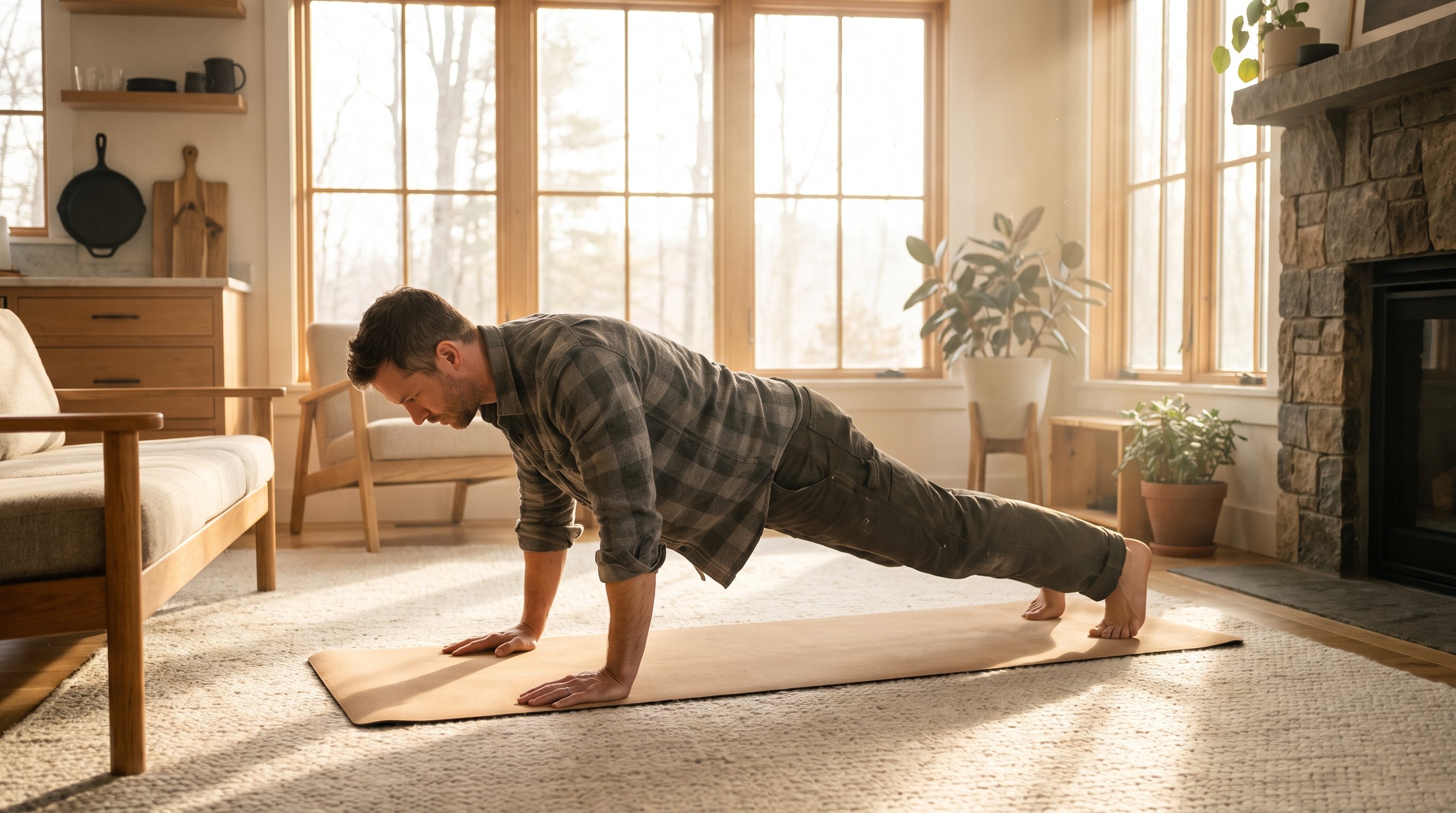
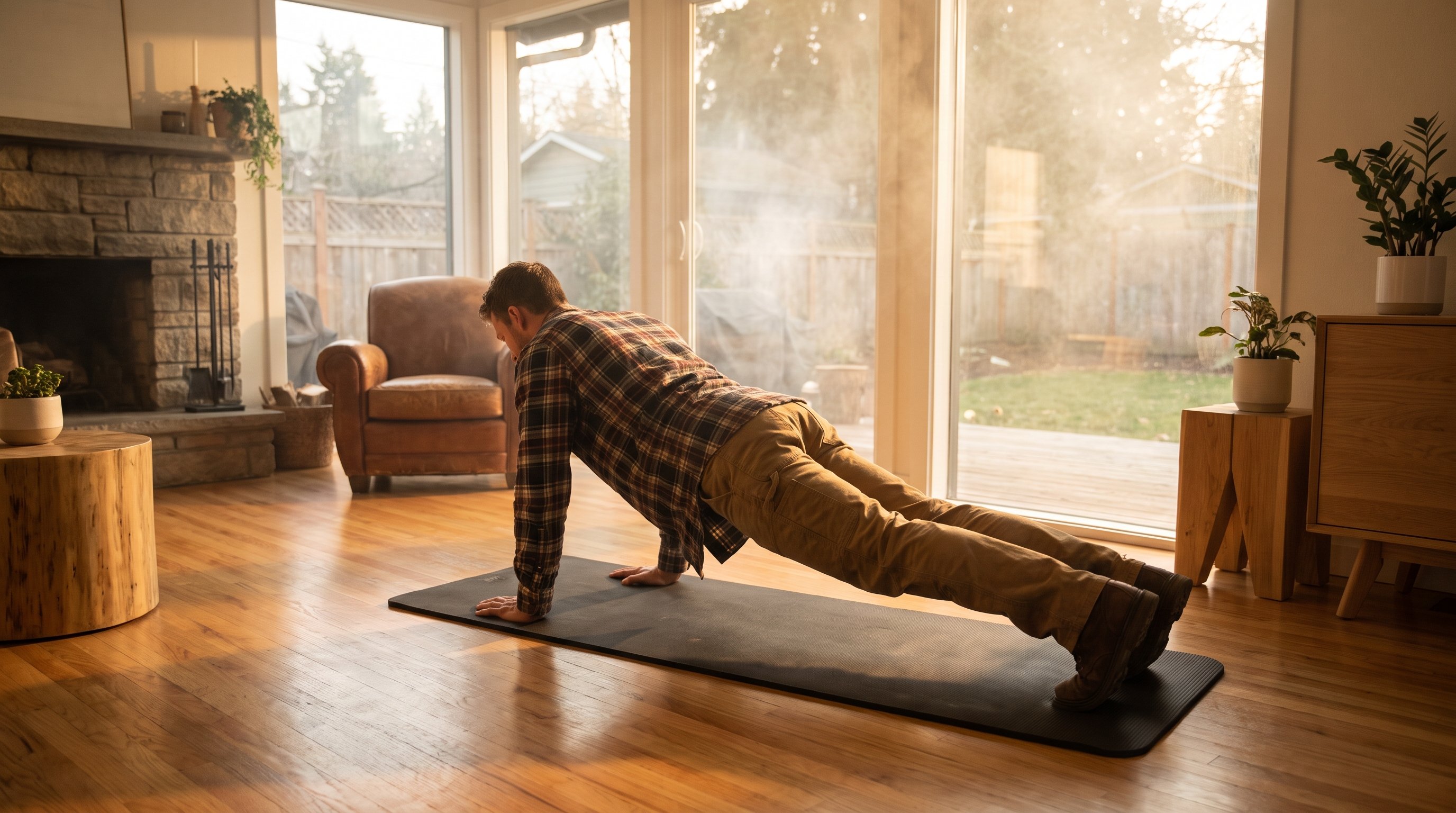
A push-up loads your chest, shoulders and arms against your bodyweight. Do that consistently and those muscle groups have no choice but to respond.
The honest arithmetic is this: three sessions a week for four weeks is twelve sessions of stimulus. Twelve sessions is enough to notice movements getting easier, even if visible change takes longer.
What calisthenics cannot do is target one body part. Doing hundreds of sit-ups will not shrink your midsection specifically - fat loss happens across the whole body, driven mostly by what you eat, not by which muscle you trained.
Why This Beats the Harder Alternative
The harder alternative is a gym membership, a commute, and a routine that depends on all three lining up on the same day.
Bodyweight training removes two of those three variables. No commute, no equipment queue - just you and a few minutes of floor space.
That matters because the training method that gets done wins over the training method that gets skipped. A moderate session completed four times a week beats a perfect session completed once.
Sessions completed per month is the real scoreboard. Intensity matters less than most people think if the sessions never happen in the first place.
The Quantity Question: How Much Calisthenics Do You Need?
There's no single number that fits everyone, but a useful starting range exists for most beginners.
Three to five sessions a week, each lasting a handful of minutes to half an hour, is enough to build a habit and see strength move in the right direction.
Find Your Own Number
Start with a number you can hit even on a bad week, then add one session once that number feels easy.
Someone with five spare minutes a day needs a different plan than someone with thirty. Both can build strength - the difference is timeline, not outcome.
| Your Schedule | Frequency | Session Length |
|---|---|---|
Very busy | 3x per week | 5-10 minutes |
Moderate time | 4x per week | 10-20 minutes |
More time | 5-6x per week | 20-30 minutes |
The Practical Question: How Do You Actually Fit This In?
Knowing the numbers is one thing. Actually opening a mat, picking exercises, and tracking whether you're improving is where most people get stuck.
This is where a tailored plan helps more than a generic list of exercises pulled from anywhere. A calisthenics app builds a plan around your current fitness and goals, so you're not guessing which moves to do or how many.
It also keeps steps, water intake and weight in one place, so progress is something you can see rather than something you have to remember.
Comparison: Calisthenics vs the Gym
Most people aren't choosing between calisthenics and nothing - they're choosing between calisthenics and a gym-based routine.
| Factor | Calisthenics | Gym Training |
|---|---|---|
Equipment needed | None | Machines, weights |
Time to start | Immediate | Travel required |
Cost | Low or free | Monthly fee |
Consistency barrier | Low | Higher |
Strength building | Yes | Yes |
Both build strength. The difference is how easily each one fits into a week that already has other demands in it.
The Forbidden Promise, Answered Honestly
No exercise, calisthenics included, can target fat loss in one area. There is no move that shrinks a stomach or slims an arm on its own.
Your body decides where it loses fat from, and that process is genetic, not something a specific exercise controls.
There's also no overnight version of this. Strength and body composition change gradually, and anyone promising a fast fix is skipping the part where consistency does the actual work.
The real answer is unglamorous: train the whole body regularly, eat in a way that supports your goal, and let time do what no single exercise can.
Levers That Change the Result
Three factors matter more than which exercises you pick.
What Actually Moves the Needle
- Consistency over intensity - four moderate sessions a week beats one hard session followed by three missed ones.
- Nutrition alongside movement - calisthenics builds strength, but body composition change depends heavily on what's on the plate.
- Progressive difficulty - the same five push-ups every week stop challenging your muscles once your body adapts, so the work needs to get slightly harder over time.
How Long Until You See Results?
This is where most people quit - somewhere between week two and week four, right when the new habit stops feeling exciting and before it feels automatic.
Strength gains in basic movements - a push-up feeling lighter, a squat feeling more controlled - tend to show up before visible body changes do.
Timing varies a lot person to person, so it's more useful to track sessions completed than to watch a calendar and expect a specific date.
Your First Four Weeks
The order of these weeks matters more than the exact numbers in them.
| Week | Focus | Goal |
|---|---|---|
Week 1 | Learn the movements | Complete every session |
Week 2 | Build the habit | Same days, same time |
Week 3 | Add slight difficulty | One more rep or set |
Week 4 | Review and adjust | Note what felt easier |

Weeks one and two are about showing up. Weeks three and four are about noticing that showing up got easier.
What Stalls Progress
Starting Too Hard
A session that leaves you sore for four days often means the next session gets skipped. Scale it back so recovery doesn't eat into your next scheduled workout.
No Nutrition Change
Movement alone changes strength faster than it changes body composition. Pairing consistent training with a meal plan built around food you already like closes that gap.
Skipping Tracking
Without any record of sessions or weight, it's easy to assume nothing is happening. A simple tracker turns vague impressions into evidence you can actually see.
Same Routine Forever
Repeating the exact same reps and sets stops challenging the body once it adapts. Small, regular increases in difficulty keep the stimulus working.
All-Or-Nothing Thinking
Missing one session doesn't erase the sessions before it. Treating a missed day as a reason to quit is the fastest way to lose the habit entirely.
Why Calistway Works
The biggest calisthenics benefit is also the simplest to lose: consistency. Calistway is built around that exact problem.
It pairs a calisthenics plan tailored to your fitness level with a meal plan, progress trackers for weight, water and steps, and challenges designed to keep you showing up when motivation dips.
Instead of guessing what to do next or losing track of progress, everything sits in one place, so the only decision left is whether to open the app today.
Final Thoughts
Calisthenics benefits aren't complicated: consistent bodyweight training builds real strength, costs nothing extra, and fits into a life that doesn't have room for a gym commute.
The one action that matters most is starting small enough that you actually repeat it, and Calistway exists to make that repetition easier to keep up.
FAQ
For most beginners, yes - bodyweight resistance is enough to build noticeable strength without added load. Once bodyweight movements feel easy, harder variations or added reps keep the challenge going.
It's not slower than any other form of resistance training - strength changes take time regardless of method. What matters is whether the routine actually gets done, and bodyweight training removes most of the excuses that stop people from training at all.
Calisthenics needs almost no space - a few square metres of floor covers most exercises. That's the whole point of bodyweight training: your body is the equipment.
Motivation naturally dips once the new-habit excitement wears off, usually before results are visible. A tracking system and challenges are built to carry you through that exact stretch, when the habit hasn't fully formed yet.
Share this post