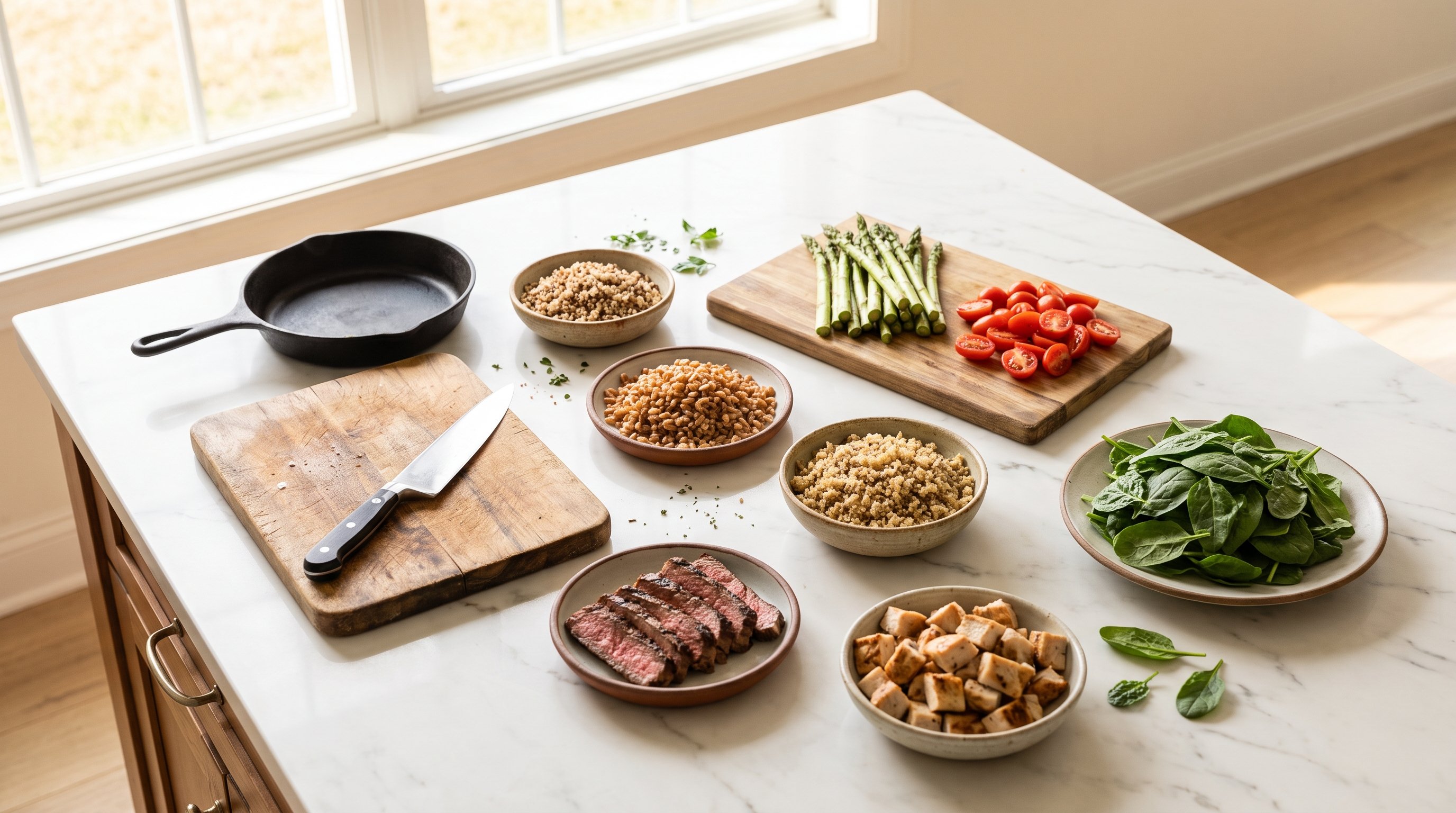
Foods for Muscle Growth: Whole Foods or Daily Supplements?
By:Author:Calistway Editorial
Updated on:October 16, 2026
- Do Foods for Muscle Growth Actually Work?
- Why This Beats the Harder Alternative
- The Quantity Question: How Much Protein Do You Actually Need?
- The Practical Question: What Does This Look Like Day to Day?
- Comparison: Whole Foods or Supplements?
- The Forbidden Promise, Answered Honestly
- Levers That Change the Result
- How Long Until You See Results?
- Your First Four Weeks
- What Stalls Progress
- Why Nutrition Coaching Works for This
- Final Thoughts
Muscle is built from roughly 20 grams of protein per 100 grams in most lean meat, fish, eggs and dairy - the raw material your body uses to repair the tiny tears training causes.
Training breaks muscle fibres down. Food, especially protein and enough total calories, is what rebuilds them slightly stronger than before - skip the food and the rebuilding stalls, no matter how hard you train.
This guide covers how much protein actually matters, what a realistic day of eating looks like, and the habits that decide whether any of it sticks.
Do Foods for Muscle Growth Actually Work?
Yes, and the mechanism is simple: muscle protein synthesis needs amino acids to work with, and those amino acids come from food, not from the workout itself.
A person eating 150 grams of protein a day is giving their body about four times the raw material of someone eating just 40 grams, even if both do the identical workout.
The arithmetic is honest: more consistent protein and calories across a week gives the body more to build with than an occasional high-protein day followed by several low ones.
None of this happens without the training stimulus first - food supports the rebuild, it doesn't replace the reason your muscles need rebuilding.
Why This Beats the Harder Alternative
The harder alternative is tracking every gram, weighing food constantly, and treating meals like a chemistry experiment.
Most people who start that way quit within weeks, not because the method is wrong, but because it's exhausting to sustain alongside a normal week.

A simpler approach - a plate that roughly has a palm of protein, a fist of carbs, and some vegetables at most meals - removes friction from daily eating.
Sessions completed and meals actually eaten, month after month, beat a perfect plan that gets abandoned by week three.
The Quantity Question: How Much Protein Do You Actually Need?
There's no single number that fits everyone, but a useful starting range is roughly 1.6 to 2.2 grams of protein per kilogram of bodyweight per day for someone training regularly.
For a 70kg person, that works out to somewhere between 112 and 154 grams of protein spread across the day - not all in one sitting.
Find Your Own Number
Take your bodyweight in kilograms and multiply it by 1.6 for a low-end target, then by 2.2 for a higher one - that range is your practical window.
Spreading that total across three or four meals matters more than hitting an exact figure, since a steady supply gives your body raw material throughout the day instead of one large dose.
| Bodyweight | Low End | High End |
|---|---|---|
60 kg | 96 g | 132 g |
70 kg | 112 g | 154 g |
80 kg | 128 g | 176 g |
90 kg | 144 g | 198 g |
The Practical Question: What Does This Look Like Day to Day?
Knowing the number is one thing - building meals around it every single day is where most people struggle.
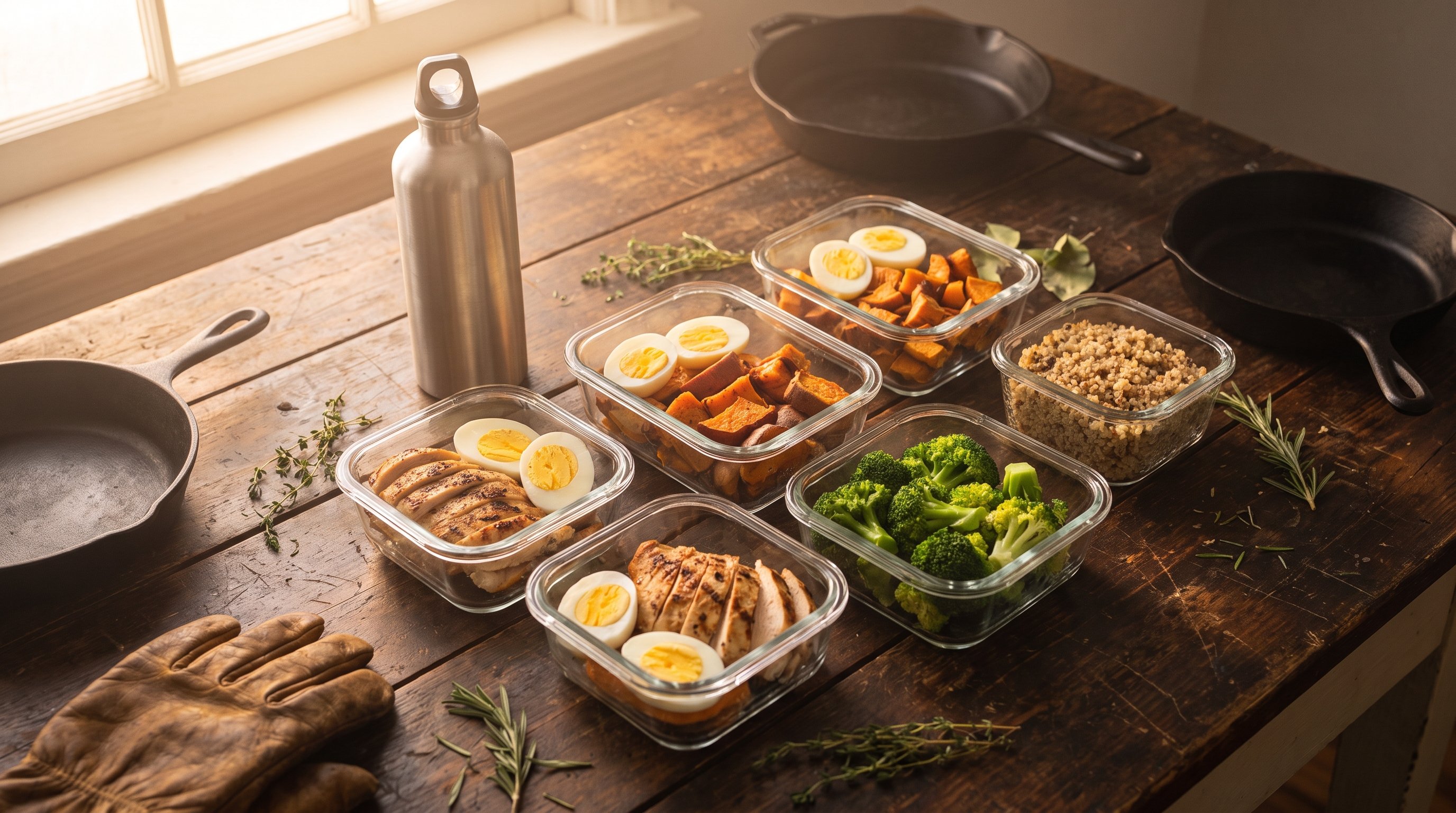
Eggs, chicken, fish, beans, yoghurt and lentils are all accessible ways to reach a daily protein target without needing to plan a complicated diet.
This is where a meal plan built around food you already like makes a real difference, since it removes the guesswork of what to actually cook that night.
Calistway offers over 1000 easy-to-follow recipes created by nutritionists, so hitting a protein target stops being a maths problem and becomes a case of picking from a list you already trust.
Comparison: Whole Foods or Supplements?
The decision most people face isn't whether protein matters - it's whether to get it from meals or lean on powders and bars to fill the gap.
| Food | Protein Density | Notes |
|---|---|---|
Chicken breast | ~31g per 100g | Also gives B vitamins |
Eggs | ~13g per 100g | Cheap, versatile |
Greek yoghurt | ~10g per 100g | Easy snack option |
Lentils | ~9g per 100g | Good plant option |
Protein powder | ~80g per 100g | Convenient, not a meal |
Whole foods bring fibre, micronutrients and a sense of an actual meal - supplements are a backup for busy days, not a replacement for eating well most of the time.
The Forbidden Promise, Answered Honestly
No food targets one muscle, and no meal builds noticeable size overnight - the body doesn't work that way.
Muscle growth is a slow accumulation of small rebuilding cycles, repeated over weeks, driven by training plus enough protein and calories to support recovery.
The honest answer is patience paired with consistency - there's no shortcut food or meal timing trick that replaces showing up and eating well most days.
Levers That Change the Result
A few factors matter more than the rest for whether food actually supports muscle growth.
What Moves the Needle Most
- Total protein across the day - hitting a consistent daily range matters more than any single meal or supplement.
- Enough total calories - protein alone can't build muscle if the body is short on overall energy to work with.
- Consistency over weeks - a pattern repeated for a month outweighs one or two perfect days followed by a gap.
How Long Until You See Results?
This is where a lot of people quit - expecting visible change within a couple of weeks and feeling discouraged when nothing looks different yet.
Changes in strength tend to show up before changes in size, and both take a stretch of consistent effort rather than a fixed number of days.
Staying with the plan through the quiet early stretch matters more than any single food choice.
Your First Four Weeks
The order you build habits in matters more than getting every number perfect from day one.

| Week | Focus |
|---|---|
Week 1 | Add protein to every meal |
Week 2 | Spread protein across 3-4 meals |
Week 3 | Match calories to training days |
Week 4 | Review and repeat what worked |
What Stalls Progress
Protein Bunched Into One Meal
Spread it across the day instead - three or four smaller doses give your body a steadier supply than one large dinner.
Not Eating Enough Overall
Under-eating leaves nothing left for repair once training demands are covered, so check total calories aren't too low before blaming protein.
Skipping Meals on Busy Days
Keep a few quick, no-thinking options on hand - eggs, yoghurt, tinned fish - so a hectic day doesn't turn into an empty one.
Expecting Fast Visible Change
Shift the focus to weekly consistency instead of daily appearance, since strength and structure change before the mirror does.
Why Nutrition Coaching Works for This
Getting the training right is only half the job - the other half is showing up with a plate that actually supports it, day after day.
Calistway pairs a tailored calisthenics workout plan with a meal plan built from recipes created by nutritionists, so food and training move in the same direction instead of working against each other.
Trackers for weight, water and steps keep the pattern visible, and challenges help keep the whole thing from fading out after a few weeks.
Final Thoughts
Eating for muscle growth doesn't need to be complicated - a consistent protein target, enough total calories, and meals you'll actually make are most of the work.
Start with one change this week, whether that's adding protein to breakfast or planning three meals ahead, and let Calistway help keep the rest on track.
FAQ
A practical range is 1.6 to 2.2 grams per kilogram of bodyweight, spread across three or four meals rather than one big serving. Use your own bodyweight to work out a number that fits, rather than copying someone else's target.
A shake can fill a gap on a busy day, but it's not a replacement for whole meals that also bring fibre and other nutrients. Whole food should make up most of your protein, with powders as a backup rather than the main source.
Simple protein sources like eggs, tinned fish, yoghurt and pre-cooked chicken need almost no preparation and still count fully toward your target. A meal plan with easy recipes removes most of the decision-making, which is often the real barrier. Calistway's meal plan is built around straightforward recipes for exactly this reason.
A few weeks is often too short a window to notice visible change, even when the underlying process is working as expected. Strength and consistency tend to shift before appearance does, so keep the pattern going rather than judging it too early.
Share this post