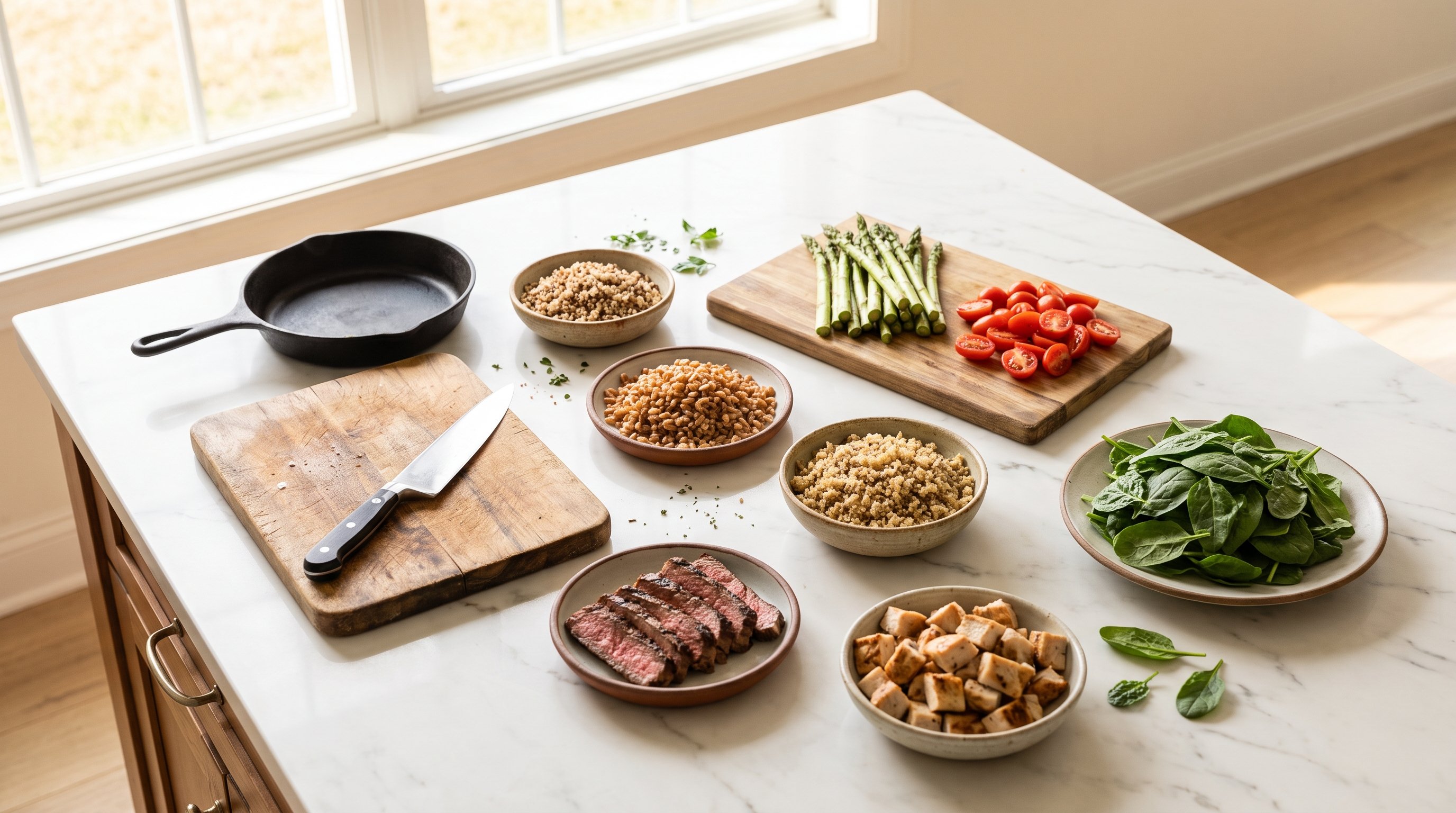
Lean Muscle Diet: How Much Protein to Eat for Real Results
By:Author:Calistway Editorial
Updated on:October 16, 2026

- Does a Lean Muscle Diet Actually Work?
- Why This Beats the Harder Alternative
- The Quantity Question: How Much Protein, How Often
- The Practical Question: Making It Fit Real Life
- Comparison: Lean Muscle Diet vs Other Approaches
- The Forbidden Promise, Answered Honestly
- Levers That Change the Result
- How Long Until You See Results?
- Your First Four Weeks
- What Stalls Progress
- Why Calistway Works
- Final Thoughts
A lean muscle diet works on one simple trade: enough protein to build and keep muscle, and a calorie balance close enough to maintenance that fat gain stays low. Nail those two things and the rest is detail.
Muscle needs a reason to stay and material to build with. Training gives it the reason. Food gives it the material - protein for the tissue, enough total calories so the body isn't forced to strip muscle for fuel.
This guide covers whether eating for muscle development actually works, how much to eat and how often, what stalls progress, and how to build a first month that doesn't fall apart by week two.
Does a Lean Muscle Diet Actually Work?
The mechanism is straightforward. Muscle tissue is maintained and built from protein, and it takes a training stimulus plus a slight calorie surplus, or at least not a deep deficit, for the body to prioritise keeping and adding it.
Run too big a deficit and the body pulls energy from wherever is easiest, which sometimes includes muscle. Run at maintenance or a small surplus with enough protein, and muscle has a better shot at staying or growing while fat gain stays modest.
Here's the arithmetic. Someone eating 2,200 calories a day at maintenance, with 140g of protein, is getting 560 calories from protein alone - about a quarter of total intake, which lines up with what muscle development generally needs.
None of this happens without the training side. Food supplies the material; movement is what tells the body to use it for muscle instead of storing it.
Why This Beats the Harder Alternative
The harder alternative is the crash-diet-then-bulk cycle: starve for a few weeks, overeat for a few more, repeat. It's exhausting, and exhausting things get abandoned.
A protein-focused eating approach is boring by comparison, and that's the point. Steady protein, steady calories, small adjustments - it's a plan someone can actually keep doing on a Tuesday in week eleven, not just on day one.

Adherence is the whole game here. A moderate approach followed for months beats a strict one followed for a fortnight, every single time, because muscle is built on repetition, not on a single perfect week.
The number that matters most isn't how clean one meal was. It's how many meals in a month roughly matched the target.
The Quantity Question: How Much Protein, How Often
Most of the useful decisions when eating for muscle development come down to quantity - how much protein per day, how many meals, how often to eat.
Spreading protein across three to four meals rather than one big serving gives the body more consistent material to work with throughout the day.
Find Your Own Number
Bodyweight is the simplest starting point: someone at 70kg working toward roughly 1.6g of protein per kilo lands near 112g a day, split across meals of about 25-30g each.
The table below gives a rough per-meal target based on total daily protein goal - use it as a starting point, then adjust based on appetite and how meals actually fit into the day.
| Daily Protein Goal | Meal Split | Per Meal |
|---|---|---|
90g total | 3 meals | About 30g each |
120g total | 4 meals | About 30g each |
140g total | 4 meals | About 35g each |
160g total | 4-5 meals | About 35g each |
The Practical Question: Making It Fit Real Life
Knowing the numbers and hitting them daily are two different problems. The gap between them is usually planning, not willpower.
Batch-cooking two or three protein sources at the start of the week removes the decision fatigue that derails most plans by Wednesday.
A structured meal plan built around food you already like earns its place - recipe libraries with over 1,000 options designed around real eating patterns make it easier to hit protein targets without eating the same three meals on repeat.
Pairing that with a tracker for water, weight and steps keeps the whole picture visible in one place, instead of guessing at the end of the week whether things are on track.
Comparison: Lean Muscle Diet vs Other Approaches
Most people choosing a way to eat are weighing a protein-focused approach against a few familiar alternatives. Here's how they stack up on the things that matter most for sticking with it.
| Approach | Focus | Difficulty | Muscle Impact |
|---|---|---|---|
Lean Muscle Diet | Protein plus maintenance calories | Moderate | Supports muscle |
Aggressive Cut | Large calorie deficit | High | Risks muscle loss |
Dirty Bulk | Large calorie surplus | Low effort, high fat gain | Muscle plus excess fat |
Fad Elimination Diet | Cutting food groups | High, hard to sustain | Often protein short |
No Structure | Eating without a plan | Feels easy short term | Inconsistent results |
The Forbidden Promise, Answered Honestly
No food or diet targets fat on one body part. Eating well and training consistently changes overall body composition, not the shape of one specific area, no matter what a plan promises.
There's no overnight version of this either. Muscle is built slowly, through repeated meals and repeated sessions, and anyone promising a fast fix is selling something the body doesn't actually do.
The honest answer is unglamorous: eat enough protein, keep calories close to maintenance, train consistently, and let time do what it does. That's the whole mechanism, and it works because it's simple enough to repeat.
Levers That Change the Result
A few things move the needle more than the rest. Get these right first before worrying about the smaller details.
The Three Levers That Matter Most
- Protein consistency - hitting a similar protein total most days matters more than any single perfect meal.
- Calorie balance - staying near maintenance, not deep in deficit or wildly over, gives muscle the material without excess fat gain.
- Training frequency - the diet only matters if there's a regular reason for the body to keep the muscle it's fed.
How Long Until You See Results?
This is where most people quit - the point where effort feels invisible. Muscle and body composition change gradually, and the early weeks often look like nothing happened at all.
Progress here is better tracked through consistency than through the mirror. Meals hit, sessions completed, weight and measurements logged - those numbers move before visible change does.
Staying vague about timing is the honest move, because everyone's starting point, training history and consistency differ too much for a fixed number to mean anything.
Your First Four Weeks
The order of operations matters more than getting every number perfect. Here's a rough shape for the first month.

| Week | Focus | Goal |
|---|---|---|
Week 1 | Track current intake | Find your baseline |
Week 2 | Set protein target | Hit it 5 of 7 days |
Week 3 | Adjust total calories | Stay near maintenance |
Week 4 | Repeat and refine | Build a routine |
What Stalls Progress
Not Enough Protein Spread Through the Day
One large protein-heavy meal doesn't cover what the body needs across 24 hours. Split the daily target across three or four meals instead of loading it all at dinner.
Calories Too Low for Too Long
A deficit that's too aggressive can work against muscle retention. Nudge intake back toward maintenance and give the body room to keep what it's built.
Skipping Meals When Busy
Missed meals mean missed protein, and missed protein adds up fast over a week. Batch-prepped meals or simple backup options remove the excuse before it starts.
No Tracking, Just Guessing
Without some form of tracking, it's easy to think intake is on target when it isn't. A simple log for meals and weight closes that gap quickly.
Training and Eating Out of Sync
Eating well without consistent training leaves muscle with no reason to stay. Pair the diet with a regular bodyweight routine so the two reinforce each other.
Why Calistway Works
Calistway pairs a tailored calisthenics plan with a tailored meal plan, so the training side and the eating side are built to work together instead of as two separate guesses.
The recipe library covers over 1,000 options created by nutritionists, which makes it easier to hit a protein target without repeating the same three meals all month.
Progress trackers for weight, water and steps, plus challenges to keep momentum going, cover the consistency side - the part that decides whether any of this sticks past week two.
Final Thoughts
A lean muscle diet doesn't need to be complicated. Enough protein, calories close to maintenance, and consistent training does most of the work over time.
Start with one change this week - hitting a protein number most days - and build from there, using Calistway if a structured plan makes that easier to keep up.
FAQ
Not always - staying close to maintenance with enough protein can support muscle while keeping fat gain low. A small surplus can help if the goal leans more toward building size.
No, adequate protein matters for anyone training regularly, not just competitive lifters. It's about giving the body material to maintain or build muscle, whatever the training style.
Batch-prepping two or three meals at once removes most of the daily decision-making. A recipe library with simple, repeatable options also cuts down prep time considerably.
The early weeks often show little visible change even when things are working, which makes it easy to lose motivation. Tracking meals and sessions in one place helps keep the focus on consistency rather than the mirror.
Share this post